

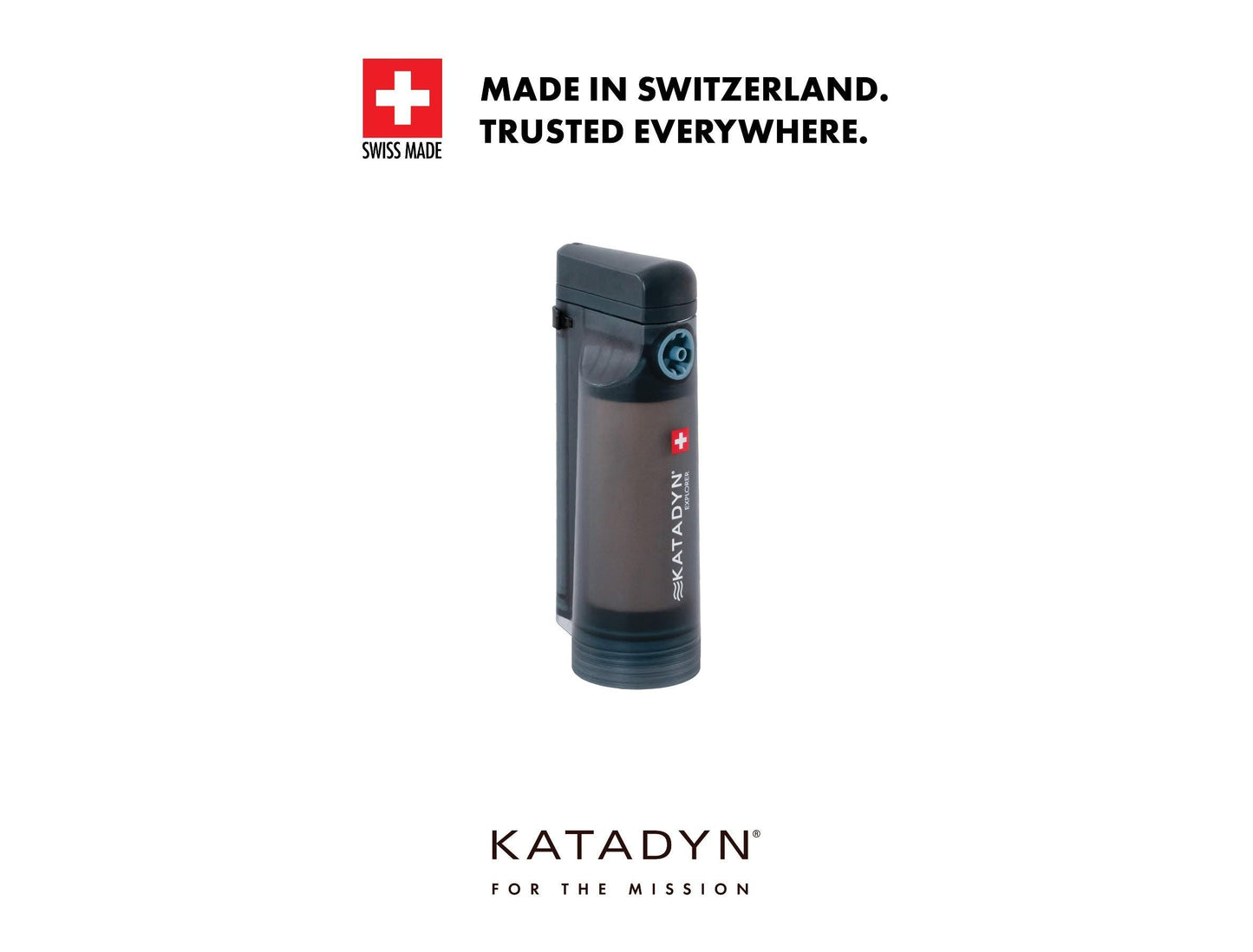
Who it is for
Good fit
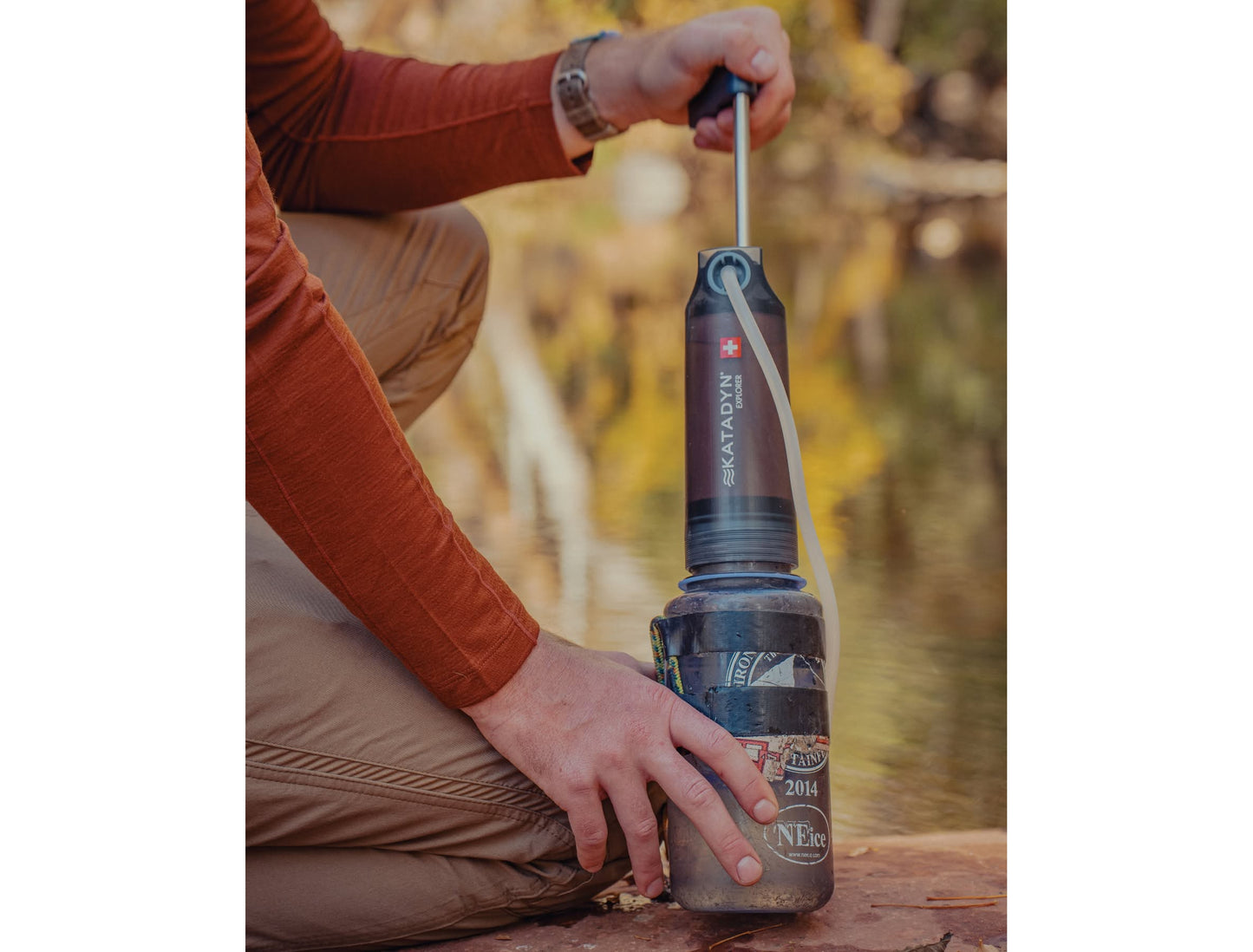
- Individuals or groups on hikes, international trips and expeditions (the manual's intended users)
- Water where bacteria and protozoa are the main risk, with a ceramic cartridge you can scrub clean
- Start with the two-stage model and upgrade to the Explorer Pro later with the optional kit
- A hand-pump filter with a steel pump piston, for frequent use and dry storage
Product details
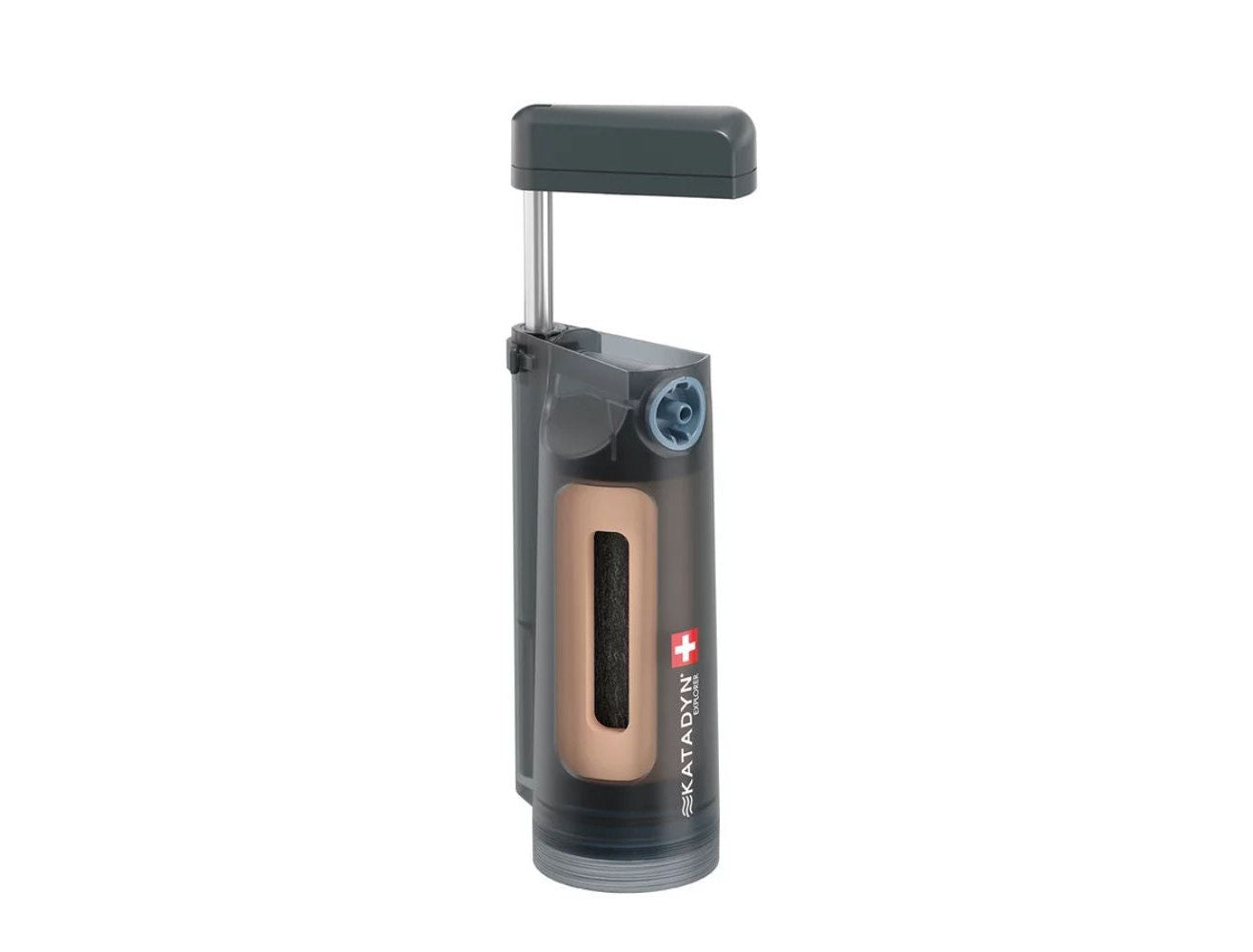
- Dual Filtration System: Equipped with a "ceramic microfilter" and "activated carbon" dual system, it can flexibly adjust the filtration layers according to the water quality environment, ensuring stable and great-tasting drinking water throughout long wilderness adventures.
- 20,000 Liter Long-lasting Ceramic Filter: The 0.2 micron ceramic filter can remove 99.9999% of bacteria, 99.9% of protozoa (Giardia, Cryptosporidium), and microplastics. It also supports repeated cleaning and has a lifespan of up to 20,000 liters, suitable for frequent use with dirty water.
- Optimized Drinking Water Taste: The independent activated carbon layer reduces odors, chlorine and chemicals and improves the taste of the water.
- Modular Upgradeability: The machine structure offers high expandability. Users can choose to purchase and install an additional virus filtration cartridge according to the environmental requirements of the destination, instantly upgrading the protection level to 0.01 micron virus interception precision.
- Robust Steel Construction: Features a steel pump piston and a rugged structure that stands up to harsh environments and frequent use.
- Dry storage: The ceramic filter can be stored completely dry, which reduces the risk of mold. The manufacturer's manual says to air-dry the disassembled parts for several days before storage, and after about every 200 liters or extended use to clean the ceramic and dry the parts.
-
Contents: Water filter unit, ceramic filter cartridge, activated carbon filter cartridge, pre-filter, hose set, cleaning sponge, wear gauge, and storage bag.
Specifications
- Weight: 480 g
- Dimensions: 89 x 66 x 213 mm
- Filter Cartridge: 0.2 micron ceramic filter cartridge, activated carbon filter cartridge
- Filter Lifespan: Ceramic filter cartridge approx. 20,000 liters (depending on raw water quality), activated carbon filter cartridge approx. 500 liters (depending on raw water quality), or 6 months after first use.
- Flow Rate: 1 liter per minute
- Effective against: Bacteria, protozoa, cysts, sediment, microplastics, reduced chemicals, reduced odors and residual chlorine
- Contents: Water filter unit, ceramic filter cartridge, activated carbon filter cartridge, pre-filter, hose set, cleaning sponge, wear gauge, and storage bag
- Origin: Switzerland

Downloads
Key specifications
| Article no. | 8021290 |
|---|---|
| Weight | 480 g |
| Dimensions | 213 x 89 x 66 mm |
| Stage 1 filter | 0.2 micron ceramic cartridge, up to about 20,000 L |
| Stage 1 effective against | Protozoa, bacteria, microplastics |
| Reduction rates (manual) | Bacteria 99.9999% (E. coli, Pseudomonas aeruginosa); protozoan cysts 99.9% (Giardia, Cryptosporidium) |
| Viruses | The ceramic cartridge does not remove viruses; a virus risk in the water needs separate treatment |
| Stage 2 filter | Replaceable activated carbon, up to about 500 L |
| Carbon replacement | When taste or odor appears after filtering, or 6 months after first use, whichever comes first |
| Stage 2 effect | Improves taste, reduces odor and chlorine |
| Maximum flow rate | 1, depending on water quality L/min |
| Prefilter | 130 micron prefilter keeps large particles out of the pump |
| Accessories | Prefilter, carrying bag, hose clip, cleaning sponge, outlet hose |
| Ceramic replacement check | Use the measuring gauge: replace the ceramic when its gap fits over it |
| Pump and protection | Steel pump piston with built-in overpressure valve |
| Dry storage | Can be stored dry; air-dry the disassembled parts for several days before storage |
| Periodic maintenance | After extended use (about every 200 L): clean the ceramic, air-dry the parts, lubricate the o-rings |
| Maximum operating temperature | 40 in use, 70 in storage °C |
| Liquids | Fresh water only |
| Upgrade | Can be upgraded to Explorer Pro with the optional upgrade kit |
| Group size and water | Individuals and groups (manual); product page spec list: 2-5 people, cloudy and clear water |
| Origin | Swiss Made |
FAQ
Can the Explorer filter viruses?
No. The manufacturer's manual states that the Explorer's ceramic cartridge does not remove viruses; if there is any risk of viruses in the water, treat it separately or use a reliable drinking water source. The manufacturer's fact sheet says the Explorer can be upgraded to the Explorer Pro with an optional upgrade kit.
How does the Explorer differ from the Explorer Pro?
The Explorer is two-stage, ceramic plus activated carbon, and weighs 480 g; the Explorer Pro adds a 0.01 micron hollow fiber membrane virus layer (the product description states it removes 99.99% of viruses) and weighs 630 g.
How long do the Explorer's cartridges last?
The ceramic cartridge lasts about 20,000 liters; the activated carbon lasts about 500 liters or 6 months after first use. Both depend on source water quality.
How do I clean the Explorer's ceramic cartridge?
The 0.2 micron ceramic cartridge can be scrubbed repeatedly. A cleaning sponge and a wear gauge are included; for detailed steps, see the manufacturer's user manual on the product page.
Can the Explorer filter cloudy water?
The manufacturer's fact sheet says the durable, cleanable ceramic is suitable for frequent use with dirty water, and the manufacturer's product page also lists cloudy water and clear water as water source types. The manual still advises using the cleanest water source available and letting sediment settle before filtering the water above it.
How many people is the Explorer suitable for, and how fast is the flow?
The manufacturer's specifications list use by 2–5 people and a flow rate of 1 liter per minute. It weighs 480 g, measures 89 x 66 x 213 mm and uses a steel pump piston.
How does the Explorer differ from the Pocket?
Both have a 0.2 micron ceramic pore size and a flow rate of 1 L per minute. The Explorer adds an activated carbon layer, has a ceramic life of about 20,000 liters and weighs 480 g; the Pocket has a life of about 50,000 liters and weighs 550 g.
What should I know about long-term storage of the Explorer?
The ceramic cartridge can be stored completely dry to reduce the risk of mold. The manufacturer's manual says to air-dry the disassembled parts for several days before storage, and after about every 200 liters or extended use to clean the ceramic, remove the activated carbon and lubricate the o-rings with silicone lubricant.
What usage limits and safety warnings apply to the Explorer?
The manufacturer's manual warns: filter fresh water only and nothing else; keep the temperature below 40 °C in use and 70 °C in storage; do not wash it in a dishwasher; do not use tools on it or modify it; do not use it if it is damaged or contaminated; and if you drop it hard and suspect damage, follow the manufacturer's website instructions to run a filter integrity test. The ceramic cartridge does not remove viruses, so a virus risk needs separate treatment.
When should I replace the Explorer's ceramic cartridge and activated carbon?
Judge the ceramic with the measuring gauge: when the gauge's gap fits over the ceramic, replace it. Ceramic capacity is about 20,000 liters, and the dirtier the water and the more often you clean it, the lower the real capacity. Inspect the ceramic for hairline cracks after cleaning, after a drop or after freezing; a cracked ceramic no longer protects you from microorganisms. The activated carbon lasts about 500 liters, or until an unpleasant taste or odor appears after filtering, or 6 months after first use, whichever comes first.
About KATADYN
Further reading
- [Mabu Valley Gear Review] When Drinking Water Can't Be Wrong: The KATADYN Explorer Hand-Pump Water Filter – A Reliable Choice for Overseas Travel and Disaster Preparedness
- KATADYN Water Filter Buying Guide: Choose the perfect purification system based on your usage scenario, water quality, and group size!
- 濾芯可以用多久?濾水器保養、收納與淨水錠保存期限
Sources & last review
You might also like
-
KATADYN BeFree Water Filtration System 1L
Vendor:KATADYNRegular price NT$1,680Regular price -
ZANE ARTS DOUBLE WALL BOTTLE 500
Vendor:ZANE ARTSRegular price NT$780Regular priceNT$0Sale price NT$780 -
KATADYN Water Filter BeFree Personal Water Purifier 1.0L Military Edition BeFree 1.0L - Black Edition
Vendor:KATADYNRegular price NT$2,180Regular priceNT$0Sale price NT$2,180 -
KATADYN Water Filter BeFree AC Personal Water Filter 1.0L Slate Blue BeFree AC Filter 1.0L Slate Blue
Vendor:KATADYNRegular price NT$2,080Regular price