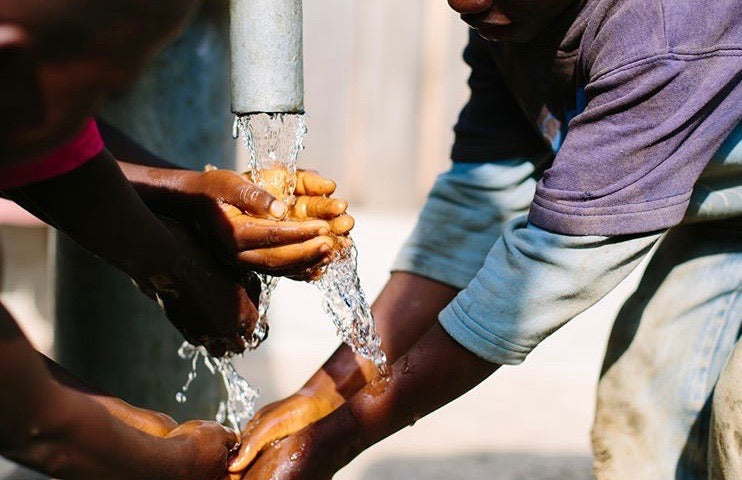
[Mabu Valley Gear Review] When Drinking Water Can't Be Wrong: The KATADYN Explorer Hand-Pump Water Filter – A Reliable Choice for Overseas Travel and Disaster Preparedness
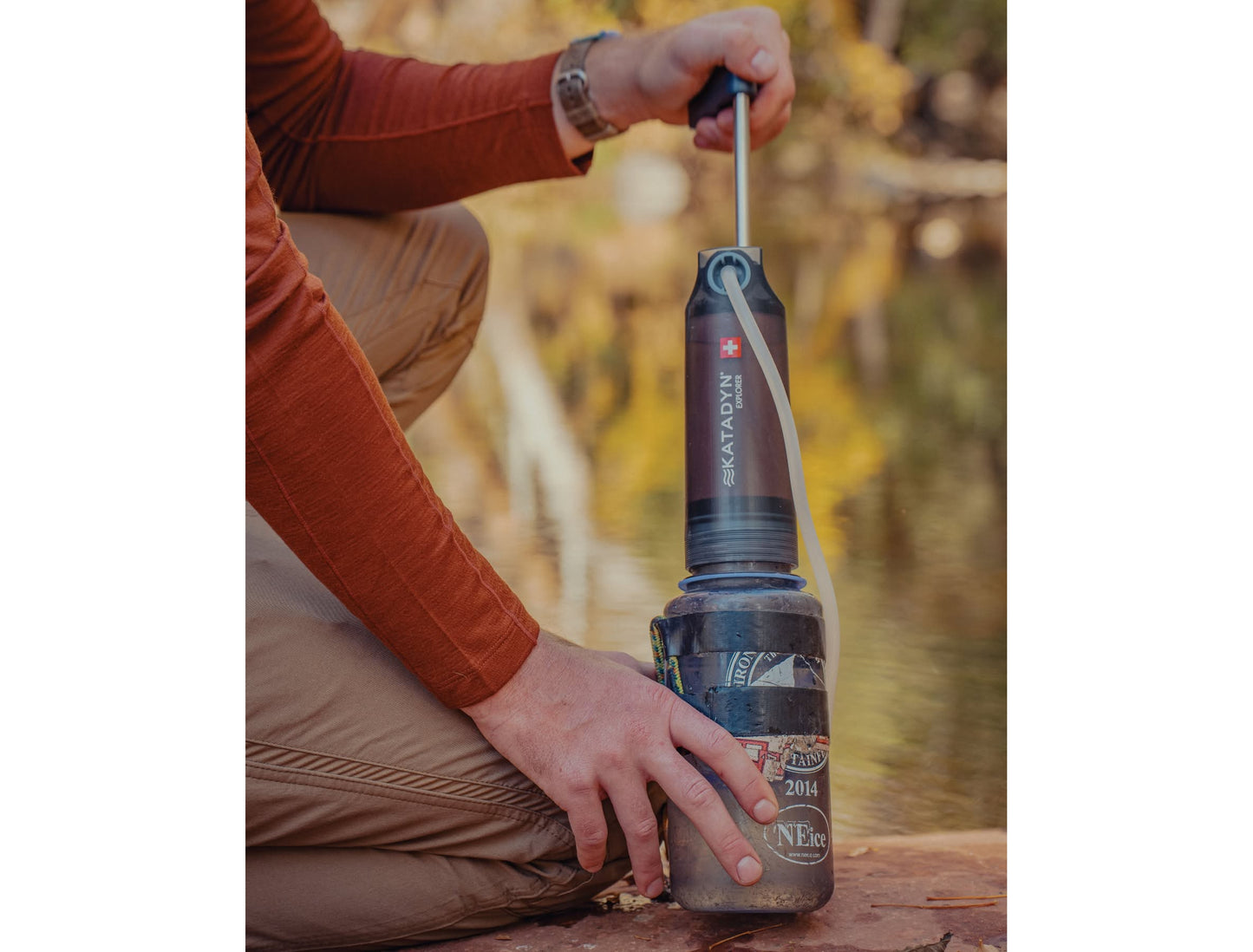
Some gear isn't used every day, but when you really need it, it must be exceptionally reliable.
KATADYN Explorer is precisely that kind of gear.
It is not meant to replace an ordinary water bottle, nor is it designed for short, lightweight trips. The Explorer is more like a high-end drinking water backup tool, perfect for those who cannot afford to have their drinking water source go wrong.
Examples include long-term overseas travel, business trips, working abroad, photography expeditions, fieldwork, disaster relief, outdoor education, camping trips, or traveling in remote areas. In these scenarios, the issue isn't just "whether you can get water," but "whether your body can maintain its normal state after drinking it."
Once your digestive system runs into trouble, it might not just be a matter of resting for a day. Your itinerary, work, family members, and team missions could all be disrupted. This is why high-end hand-pump water purifiers like the Explorer are worth getting to know.
KATADYN Explorer at a Glance (30 Seconds)
Product Positioning: A high-end hand-pump water purifier; the focus is not on being lightweight, but on reliability, maintainability, and long-term backup capabilities.
Suitable Scenarios: Overseas travel, travel to unknown regions, disaster water-supply backup, remote work, outdoor education, camping, and group use.
Explorer Filtration Setup: Uses a 0.2-micron ceramic filter and an activated carbon filter, which can handle bacteria, protozoa, and microplastics while improving taste and reducing chlorine odor.
Explorer Pro Filtration Setup: In addition to the ceramic and activated carbon filters, it adds a 0.01-micron hollow fiber virus membrane, making it suitable for areas where water safety is highly uncertain.
Key Note Before Purchase: If you are just looking for a convenient daily water bottle, this might not be your first choice; however, if you need risk control for your drinking water, its value becomes much clearer.
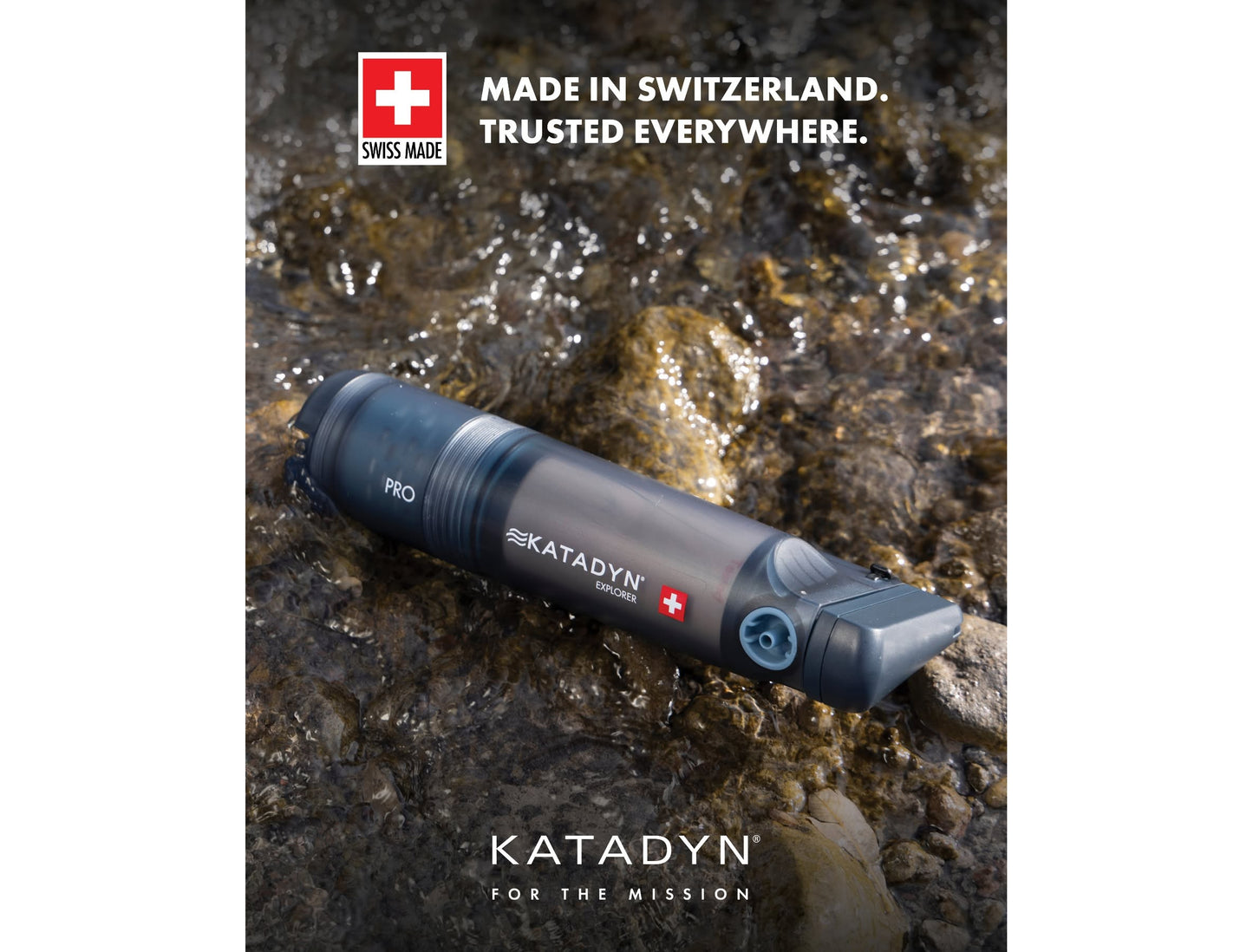
It’s not just a water bottle, but a drinking water backup system
If you are just going on a day hike or a route with stable supply points, you don't necessarily need a water purifier of this level.
Its price, weight, and usage logic are beyond the level of a "casual water bottle purchase." The Explorer is better suited for those willing to invest in risk control, long-term backup, and a stable water supply.
The value of the Explorer doesn't lie in being the smallest, lightest, or cheapest, but in providing a reliable, maintainable, and stable tool for treating drinking water when the source is uncertain, when long-term backup is needed, or when multiple people are involved.
Simple Verdict: If your needs are for short durations, low-risk environments, or individual use, a lightweight water bottle might be more suitable; if your needs involve overseas travel, remote areas, disaster relief, multiple people, or unknown water sources, then a hand-pump purifier like the Explorer is worth serious consideration.
Overseas Travel: Incorporate Drinking Water Risk into Your Planning
Long-term overseas travel involves more than just finding where to refill; it includes the reliability of water sources, piping, and storage facilities.
Especially when visiting areas where you are unfamiliar with the water quality, plumbing, storage, or hygiene conditions, even if accommodations look normal, you might find yourself second-guessing the tap water, guesthouse water towers, public taps, ice cubes, and even water used for washing fruit.
For those on business trips, family travel, extended independent travel, working abroad, or on photography and fieldwork assignments, once your digestive system is affected, the entire itinerary could be disrupted. In this context, drinking water is no longer just about convenience—it is a part of managing your trip's risks.
The Explorer Pro's virus membrane is one of the microbial risk control tools within its specified scope; actual usage must still be based on water source conditions, manufacturer instructions, and necessary pre- or post-treatment judgments.

Why is virus protection worth mentioning specifically?
When people think of water purifiers, they first think of sediment, bacteria, or protozoa. But in overseas travel, disaster relief, remote areas, or environments with unstable sanitation, water risks sometimes go beyond "visible dirt."
The US CDC notes that Norovirus can spread through contaminated food, water, or surfaces, and drinking water can also be contaminated due to septic tank leakage or incomplete treatment. For travelers, the biggest trouble with these gastrointestinal viruses isn't necessarily being hospitalized, but having the vomiting, diarrhea, and dehydration directly derail the whole trip.
Another example is Hepatitis A. The CDC states that the Hepatitis A virus can be transmitted through contaminated food or beverages, with symptoms lasting from several weeks to months. This is why in regions where water quality, food processing, and sanitation are unfamiliar, drinking water, ice, and even water used to wash fruit are not just about "how it tastes."
The WHO also points out that Hepatitis E is primarily transmitted through contaminated drinking water and can cause outbreaks in areas with inadequate water, sanitation, and hygiene. This context reminds us: when the destination is remote, a post-disaster environment, or a place with unstable infrastructure, virus risks should not be overlooked.
Simple Verdict: The Explorer Pro's virus membrane isn't meant for daily drinking water, but to provide an extra layer of risk control when you cannot verify the water source, pipes, storage, or hygiene conditions. It cannot replace vaccines, boiling, hand hygiene, or food safety, but in high-risk water scenarios, it is indeed more comprehensive than standard purifiers that only handle bacteria and protozoa.
In which scenarios is it actually useful?
Long-term Overseas Travel: Unfamiliar destinations, long travel distances, and unpredictable water supply options—especially when heading to areas with unstable water quality or infrastructure—require more cautious drinking water risk management.
Business Trips, Working Abroad, and Photography/Fieldwork: These trips often involve task pressure, where you cannot afford health issues. The cost of gastrointestinal discomfort caused by drinking water could be far higher than the equipment itself.
Household Disaster Preparedness and Water Outages: In the event of typhoons, earthquakes, flooding, or extended water outages, you need more than just stored water; you need to consider how to treat available water sources.
Disaster Response Teams, Outdoor Education, and Camping: With multiple users, fixed water treatment needs, and long times outdoors, the focus is on a stable supply and maintainability, rather than individual weight.
Fieldwork, Engineering, Agriculture, and Remote Area Movement: Not limited to mountaineers; anyone spending long periods in areas with uncertain water sources will find a hand-pump purifier much more meaningful than a standard travel bottle.
Explorer vs. Explorer Pro: Two forms for different water risks
The Explorer and Explorer Pro can be seen as two variations under the same equipment logic, designed for different levels of water risk.
Explorer uses a 0.2-micron ceramic filter and an activated carbon filter. The ceramic filter handles bacteria, protozoa, and microplastics; the activated carbon improves water taste, reduces odors, and cuts down chlorine. This format is suitable for most outdoor water collection, disaster relief, and general travel risks.
Explorer Pro adds a 0.01-micron hollow fiber virus membrane to the ceramic and carbon filters. When sanitation conditions are highly uncertain, infrastructure is unstable, or you need more complete microbial protection, the Pro version is a more rational choice.
In short, the Explorer is a highly reliable hand-pump water filter; the Explorer Pro is a complete water purification system that also accounts for viral risks.

Why is a hand-pump version more meaningful for disaster and team use?
Water bottles are intuitive, squeeze filters are lightweight, and gravity filters are effortless. So why do we need a hand-pump version?
Because the Explorer is not positioned as "drink while you walk," but as "turning uncertain water sources into usable drinking water."
You can place the intake hose into a stream, bucket, hydration bladder, or other available source and use the pump to filter water into bottles, pots, or storage containers. For group use, base camps, disaster relief, work crews, or long-term travel, this capability to provide a stable volume of water is more important than simply chasing light weight.
Especially during water outages or when supply is unstable, the ability to convert accessible sources into drinking water is more critical than the equipment's weight.
Specifications: Core Filtration and Long-term Usage Costs
Explorer: 0.2-micron ceramic filter, activated carbon filter. Max flow rate approx. 1 liter/min. Ceramic filter life up to 20,000 liters. Activated carbon life up to 500 liters. Weight approx. 480g. Dimensions approx. 213 × 89 × 66 mm.
Explorer Pro: 0.2-micron ceramic filter, activated carbon filter, 0.01-micron hollow fiber virus membrane. Max flow rate approx. 1 liter/min. Ceramic filter life up to 20,000 liters. Activated carbon life up to 500 liters. Virus membrane up to 10,000 liters. Weight approx. 630g. Dimensions approx. 292 × 89 × 66 mm.
These figures can be affected by water quality. The dirtier the water, the more sediment, and the more frequent the use, the more the actual flow rate and filter life may decrease. This is why pre-filtering, regular cleaning, and proper storage directly impact the user experience.
Who is it NOT for?
The Explorer is great, but not everyone needs it.
If you are just looking for a daily water bottle, a gym bottle, an accessory for short hikes, or mainly just want to improve the taste from a water dispenser, then a BeFree AC Bottle or other lightweight filter bottle might better fit your needs.
If you only travel in cities with very stable supplies where bottled water is easily available in hotels and convenience stores, and you don't intend to treat unknown water sources, then the Explorer might feel too heavy, expensive, and overkill.
If you don't want to clean, maintain, or understand filter life, it’s not the most suitable choice either. The Explorer's value comes from its maintainability and long-term use, which means the user must be willing to operate it correctly.
Key Note Before Purchase: The Explorer is not a cheap entry-level product, but high-end drinking water backup gear. It is suitable for those who cannot afford the risks of compromised water, not for those simply wanting a light water bottle.
Usage Warning: Even the best water purifier is not a cure-all
Both the Explorer and Explorer Pro are designed to address microbial risks and improve the taste of drinking water, but this does not mean they can handle all types of contamination.
If the water source has obvious industrial pollution, oil, pesticides, heavy metals, chemical contamination, seawater, or unknown toxic substances, you should still avoid using it. Such sources are beyond the scope of safe treatment by standard outdoor water purifiers.
Activated carbon can improve odors, chlorine taste, and some unpleasant flavors, but it should not be understood as capable of completely removing all chemical pollutants. If the water source risk is unknown, you should prioritize finding a more reliable source or complement it with boiling, disinfection, or professional water treatment equipment.
Additionally, understand virus risk. The Explorer itself is a ceramic and carbon filter format; if you require viral protection, choose the Explorer Pro or install the compatible virus membrane module as per the manufacturer's instructions.
Confirm these points before purchasing
Can you afford for your drinking water to go wrong?
If your trip can rely solely on confirmed-safe bottled water or reliable sources, you don't necessarily need this level of equipment; if the destination water is uncertain and your mission cannot be interrupted due to water issues, the value of the Explorer becomes clearer.
Will you be heading to places with uncertain water sources?
Unknown overseas regions, remote areas, post-disaster environments, water outages, and outdoor group activities are all scenarios better suited for the Explorer.
Do you need virus protection?
If it’s just general outdoor water collection, the Explorer might be enough; if the destination sanitation is unfamiliar and water risks are higher, the Explorer Pro will be more complete.
Can you accept its price and size?
This is not a low-cost entry product, but a high-end water purification system. Buying it isn't to save a little on bottled water, but to have a more reliable water treatment capability at critical moments.
Conclusion: When clean water is no longer taken for granted
Clean water is too easily taken for granted in many daily scenarios.
But once you head to unknown regions, need to manage your physical health, prepare for household disasters, lead team activities, or cannot afford to have your drinking water go wrong, the water source becomes a risk that must be managed in advance.
The Explorer provides reliable ceramic and carbon filtration; the Explorer Pro further incorporates viral risk management. They are not meant to replace all water treatment methods, but to give you a truly usable, maintainable, and long-term backup option when your water source is uncertain.
For those who know their own requirements, this is precisely why high-end gear is worth the investment.
[[Related Products]]
Need help choosing the right product?
If you are not sure which scenario suits you—the Explorer or the Explorer Pro—you can contact the Mabu Valley official LINE. We can help you determine which model is more appropriate based on your destination, water source conditions, disaster backup needs, and the number of users.
Learn more about the brand
Learn more about KATADYN Water Purification Equipment
References
The background information on Norovirus, Hepatitis A, Hepatitis E, and waterborne disease risks is compiled from public data by the CDC and WHO. This information is used to explain the context of water source risks and does not constitute specific product case studies or medical advice.
CDC: Norovirus Transmission
CDC: Hepatitis A Basics
WHO: Drinking-water
WHO: Hepatitis E