[Mabu Valley Gear Journal] Water Outages, Disasters, and Emergency Water Supply for Temporary Camps: KATADYN Rapidyn Emergency Filter
During water outages, typhoons, earthquakes, unstable water supply in mountain huts, or when a temporary camp requires shared drinking water for many people, the biggest concern is often not the lack of a water source, but "Is this water safe to drink?"
Personal water filters are generally suitable for individual use, but when the number of users increases and there is a need to provide a continuous supply of drinking water, you need a more stable and easier-to-manage water filtration method.
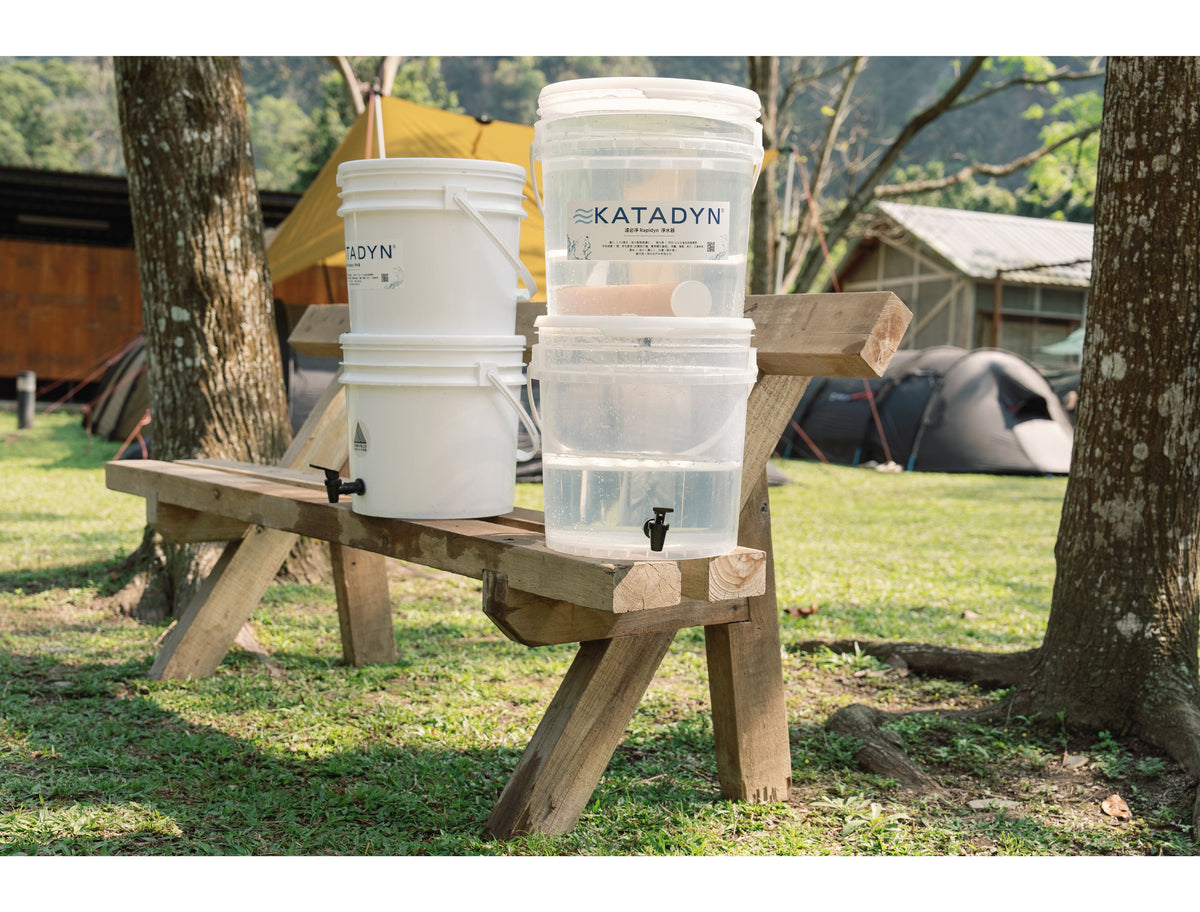
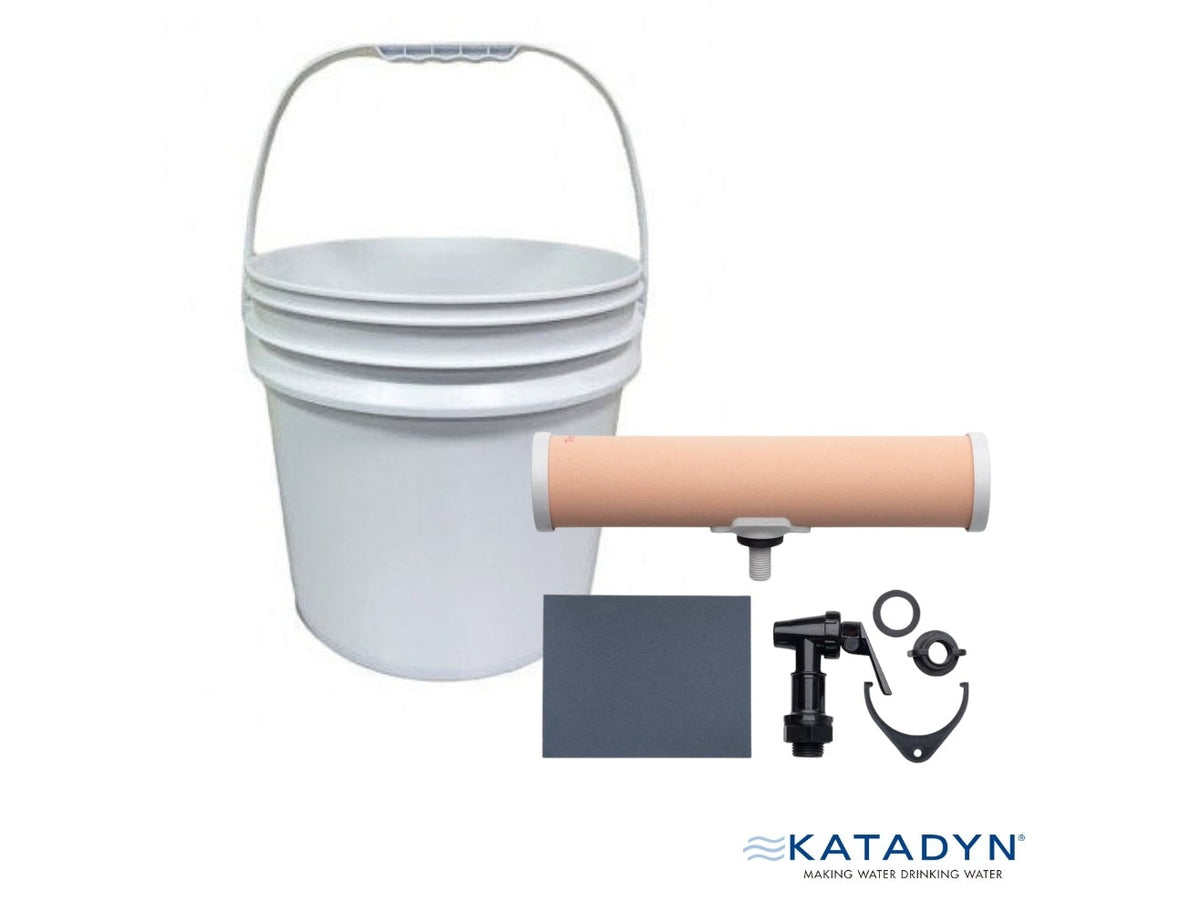
The KATADYN Rapidyn Emergency Water Filter is a gravity-fed ceramic water filtration system designed for disaster preparedness, temporary drinking water, and group water usage.
It requires no electricity, no pumps, and no connection to a faucet. Simply prepare a food-grade storage bucket, install the filter element and faucet kit, and pour in the raw water to be filtered; you can then obtain filtered water through gravity. Whether the water is safe to drink still depends on the risk level of the water source and the product's filtration capabilities.
Understanding the Rapidyn Emergency Water Filter in 30 Seconds
- Suitable Scenarios: Disaster preparedness, emergency water outages, temporary camps, mountain huts, group outdoor activities, disaster relief, and humanitarian aid.
- Operating Principle: Gravity-fed water filtration; no electricity, pumps, or faucet pressure required.
- Filter Material: Swiss-made 0.2-micron ceramic microfilter.
- Filters Out: Bacteria, protozoa, cysts, sediment, algae, spores, and microplastics.
- Official Flow Rate: Approximately 4 liters per hour.
- Filter Lifespan: Up to approximately 20,000 liters; actual lifespan varies depending on raw water quality.
- Cleaning Method: When flow slows down, use the included cleaning pad to scrub the ceramic filter surface to help restore flow.
- Limitations: Not suitable for seawater, heavy metals, pesticides, industrial pollution, or water sources with high viral risk.
Not a Personal Bottle, but a Group Water System for Emergencies
The Rapidyn is different from standard portable water bottles.
It is not designed for one person to sip on the go; rather, it enables a family, a team, or a temporary camp to establish a simple and reliable drinking water treatment process in the absence of electricity and a stable tap water supply.
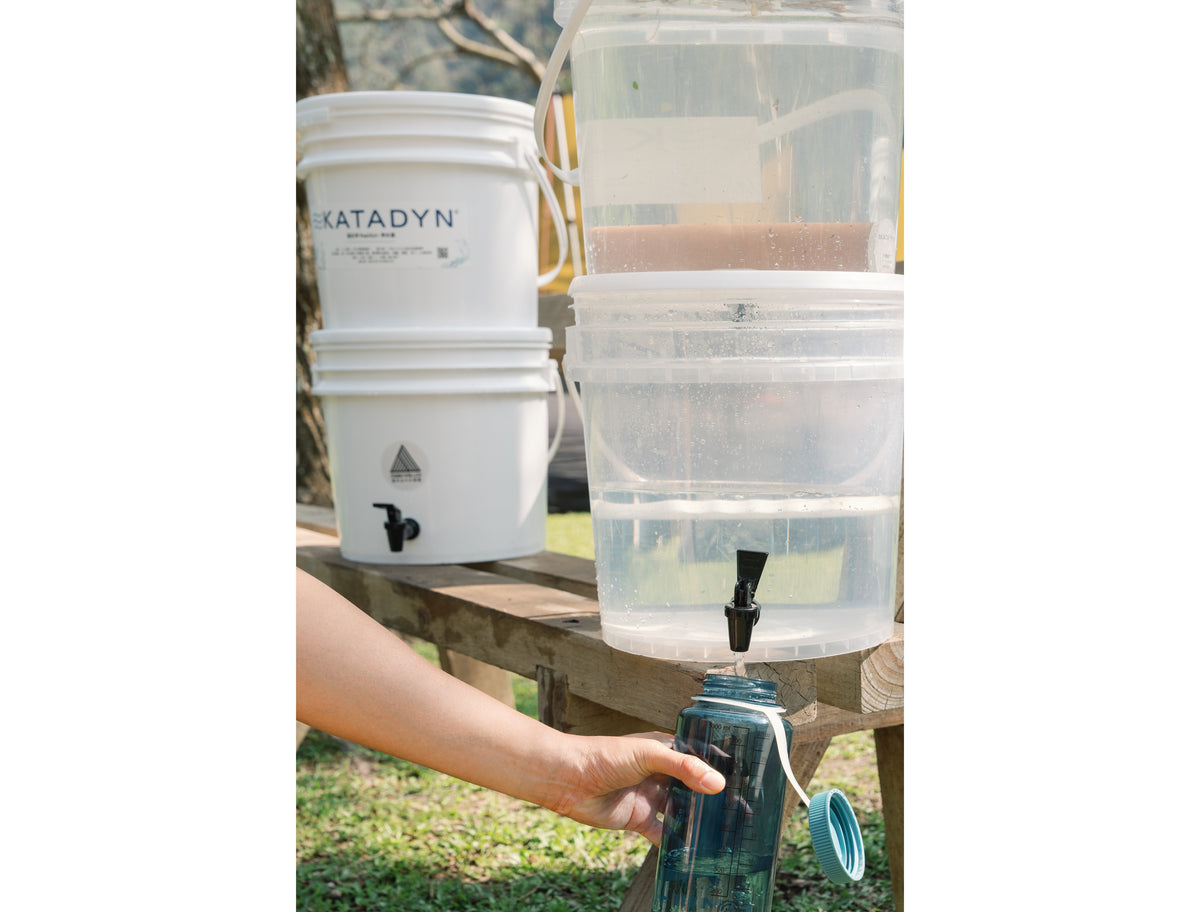
For disaster preparedness, what truly matters is not the complexity of the equipment, but whether it can be quickly understood, installed, and reliably used in an emergency. With its gravity-fed design, users only need to prepare a bucket, install the filter, and add raw water to start the filtration process.
This design is particularly well-suited for water outages, disaster relief sites, mountain hut campsites, temporary workstations, or any environment where many people share a water source.
Why shouldn't you rely solely on bottled water for emergency preparedness?
When most families prepare emergency kits, they think of bottled water. However, bottled water has two limitations: it takes up space, and it is a finite resource.
The value of the Rapidyn is that it doesn't just provide a supply of water; it provides the capability to "process available water sources." When a water outage lasts for an extended period, or when you need to process water from storage buckets, water tanks, streams, or rainwater, a filtration system is much more scalable than simply stockpiling water.
According to official specifications, the Rapidyn uses a 0.2-micron ceramic microfilter that can treat clear and turbid water, filtering bacteria, protozoa, cysts, sediment, and particles within the product's listed range. If the raw water is very turbid, it is recommended to let it settle or perform pre-filtration with a cloth before feeding it into the Rapidyn system; this will help maintain the filter's flow rate and lifespan.
For homes, retail stores, warehouses, campsites, or small organizations, it can be a highly practical piece of disaster relief equipment.
Use Cases: Where is it suitable to prepare the Rapidyn?
Household Disaster Preparedness: Suitable for inclusion in home emergency kits alongside drinking water, emergency rations, lighting equipment, and essential medicines. When a water outage is prolonged, it can be used to treat available freshwater sources.
Mountain Huts and Campsites: Suitable for shared drinking water scenarios. Compared to everyone using individual filters, a gravity-fed system is easier to manage in terms of separating raw and clean water.
Disaster Relief and Temporary Workstations: Suitable as a temporary drinking water treatment device in environments without stable electricity, water pressure, or tap water supply.
Retail, Warehousing, and Community Support: Suitable when paired with food-grade storage buckets as a basic water supply preparation for aftermaths of water outages, typhoons, or earthquakes.
Temporary Camps and Mountain Huts: No Electricity, No Manual Pumping Required
In mountain cabins, temporary camps, group camping trips, or project outposts, drinking water is often a shared necessity for everyone.
If everyone uses individual filters to process water, it is not only inefficient but also makes it difficult to manage the separation of clean and raw water. The Rapidyn uses an upper-and-lower or bucket-based modular approach, providing a clearer distinction between raw and treated water.
More importantly, it requires no electricity and no constant manual pumping. Once raw water is added, the system filters continuously through gravity, allowing users to focus their attention on camp management, meal preparation, or other tasks.
0.2-Micron Ceramic Filter: Durable, Cleanable, and Suitable for Long-Term Storage
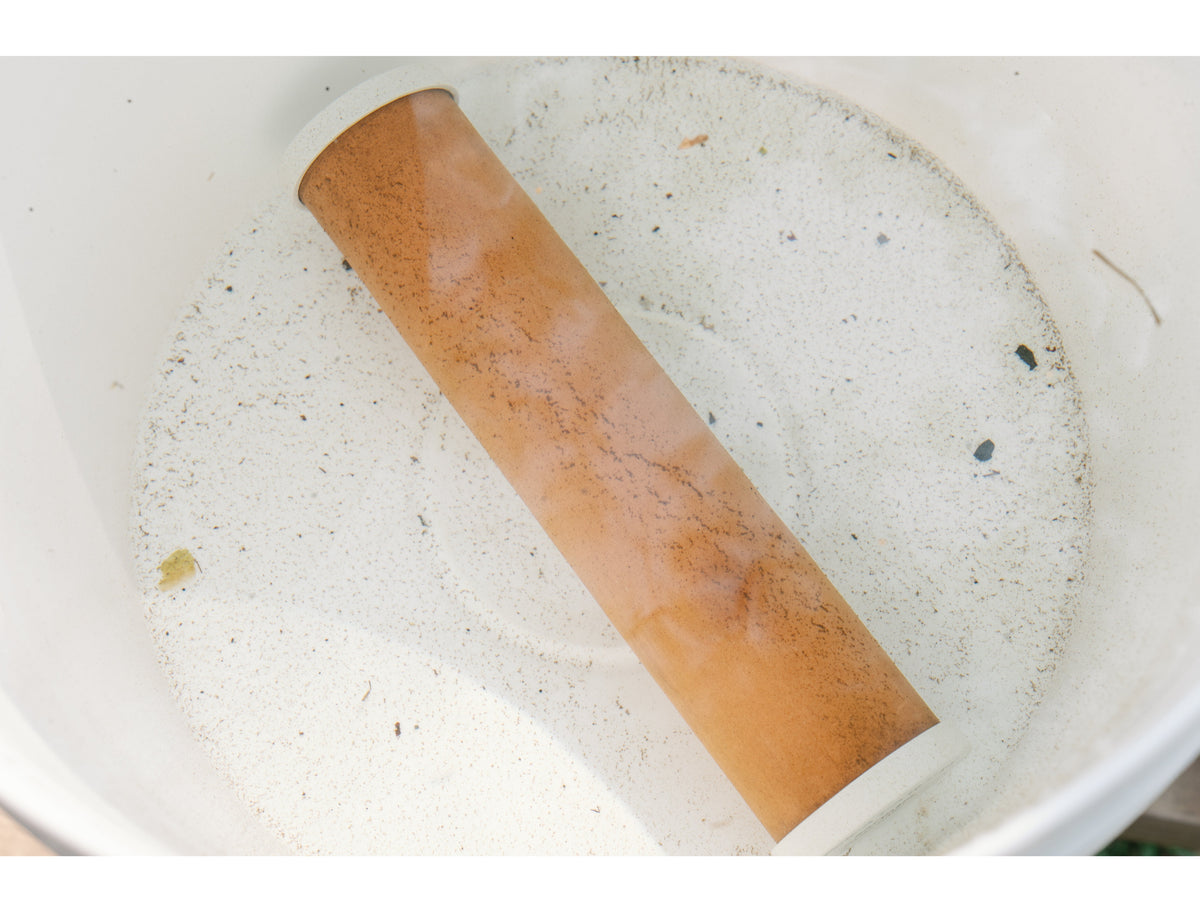
The Rapidyn uses KATADYN's ceramic microfiltration technology with a 0.2-micron pore size to filter bacteria, protozoa, cysts, sediment, and particles.
The advantage of a ceramic filter is its stable, durable structure that can be cleaned repeatedly. After a period of use, if the flow rate slows down, simply use the included cleaning pad to lightly scrub the surface of the filter to remove adhered sediment and restore the flow rate.
The official lifespan for the Rapidyn filter element is up to 20,000 liters. The actual lifespan is affected by raw water quality; the more turbid the water, the more it is recommended to perform settling or pre-filtration to reduce the burden on the ceramic filter.
For disaster relief supplies, "long-term storage capability" is also critical. The Rapidyn's ceramic filter can be stored dry, making it an excellent piece of emergency equipment to keep in storage and deploy only when needed.
Usage Warning: An Emergency Filter is Not a Universal Solution
The Rapidyn is suitable for use with clear water, turbid freshwater, stream water, rainwater, stored water, and emergency water extraction, but it is not a desalination machine, nor is it a chemical contamination treatment device.
If the water source may be contaminated by industrial waste, pesticides, heavy metals, oil, chemical substances, or seawater, it is not recommended to rely solely on the Rapidyn. If the local area has a high viral risk or unstable public health conditions, it is recommended to use it in conjunction with boiling, disinfection tablets, UV light, or other appropriate water treatment methods.
In short, the Rapidyn is well-suited for addressing common microbial and sediment risks in emergency scenarios, but one must still choose the right treatment method based on the condition of the water source.
How to choose between the Complete Kit and the Filter-Only Version?
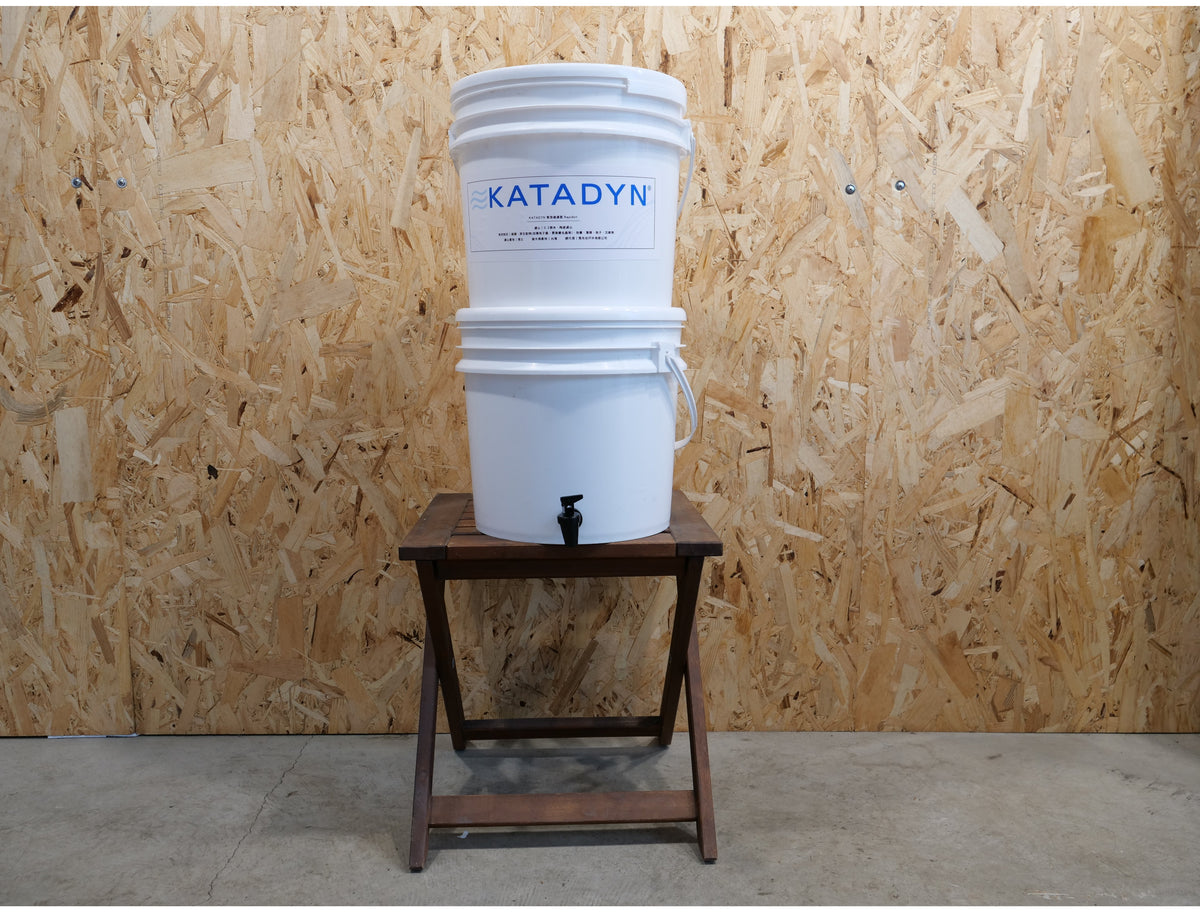
The Rapidyn is available as a complete kit or as a version without the storage bucket, and they are suited for different usage patterns.
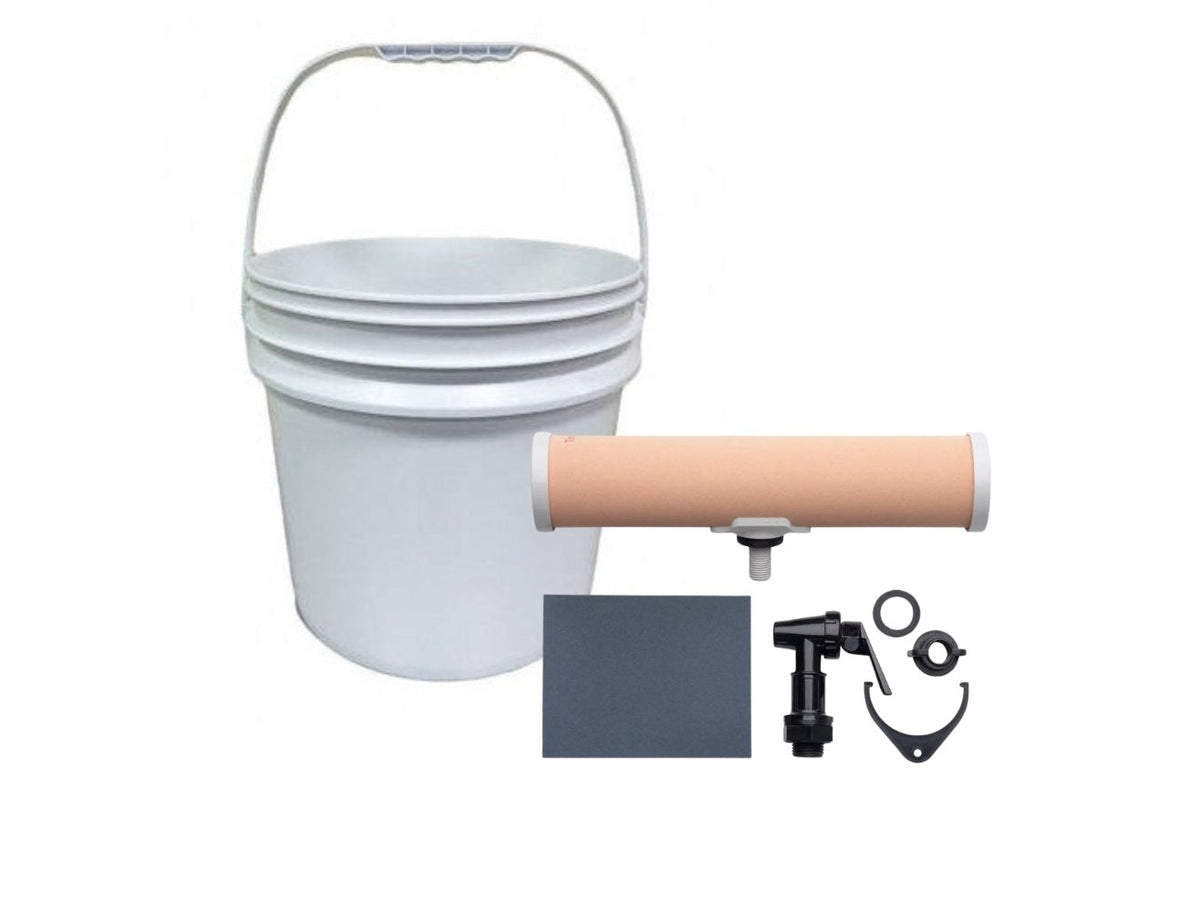
- Rapidyn Emergency Water Filter Kit: Suitable for those preparing their first disaster filtration system and wishing for faster setup after unboxing. The kit includes a pre-processed dedicated storage bucket, perfect for families, campsites, institutional support, and educational demonstrations.
- Rapidyn Emergency Water Filter (No Bucket): Suitable for those who already have a food-grade storage bucket, need to configure their own system, or wish to install it flexibly based on specific site spaces and container specifications.
If you choose to provide your own bucket, ensure it is made of food-grade material and has an inner diameter of at least 27 cm to accommodate the Rapidyn's installation requirements.
Who is it for?
The Rapidyn is well-suited for the following users and organizations:
- Disaster preparedness for homes, retail stores, warehouses, or offices.
- Campsites, mountain huts, farms, or temporary camps.
- Disaster relief, firefighting, search and rescue, outdoor education, and volunteer teams.
- Emergency preparedness for prolonged water outages, typhoon seasons, and earthquakes.
- Environments requiring shared drinking water for multiple people without stable electricity or water pressure.
Official Case Study: From Disaster Prep to Humanitarian Relief
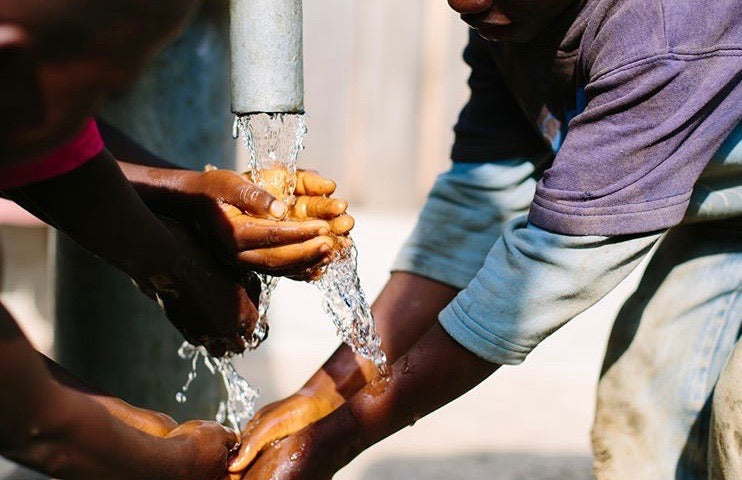
The Rapidyn is not just about specifications on paper. In official KATADYN case studies, World Vision Switzerland utilized the Katadyn Rapidyn Water Filtration System to support local drinking water needs in the Wasa safe water project in Tanzania.
This demonstrates that the Rapidyn is not a standard personal filter, but a gravity-fed system designed for "group, temporary, and infrastructure-lacking" scenarios. For users in Taiwan, this aligns perfectly with needs during water outages, disaster management, mountain hut stays, campsites, or volunteer activities.
In other words, the value of the Rapidyn is not just in cleaning water, but in establishing a simple, maintainable, and shareable drinking water process in unstable environments.
Case source: Katadyn official Case Studies
Things to Consider Before You Buy
The Rapidyn is an emergency water filter intended for disaster and group use. Before purchasing, it is recommended to confirm the number of users, the intended location, the water source type, and whether you need the kit with the storage bucket.
If this is the first time a family or organization is establishing a filtration contingency, the complete kit is more intuitive. If you already have a suitable food-grade bucket or prefer to configure the system according to site conditions, the version without the bucket offers more flexibility.
Additionally, confirm the risks associated with your water source. The Rapidyn is suitable for treating microbes and sediment in freshwater, but not for seawater, heavy metals, pesticides, oil, or industrial pollution. A filter is not a universal solution, and evaluating your water source remains crucial.
Conclusion: Adding Clean Water Capability to Your Emergency Prep
In daily life, turning on a tap and getting water is something easily taken for granted. However, in the event of a water outage, disaster, or temporary outdoor situation, drinking water immediately becomes the most critical resource.
The KATADYN Rapidyn Emergency Water Filter provides not just a one-time replenishment, but the capability to continuously process water in emergency scenarios.
For families, campsites, disaster relief units, and outdoor groups, it is a practical piece of equipment worth preparing in advance, familiarizing yourself with its installation, and including in your emergency supplies list.
[[Related Products]]
To learn more about the KATADYN Rapidyn Emergency Water Filter, or for assistance in choosing between the kit and the filter-only version, please contact us via the official Mabu Valley LINE.
Learn More About the Brand
If you would like to learn more about the brand's background, product philosophy, and complete product line, you can also refer to the brand website.