[Mabu Valley Equipment Log] A newly designed and developed mission-specific water supply system: The U.S.-made SPECTRA Aquifer 3000, a mobile water production system for hydraulic disaster prevention, military, and rescue missions.

True emergency water supply is not just about transporting water to a site; it is about establishing a sustainable source of drinking water on-site when roads are blocked, pipelines are disrupted, power is unstable, water sources are contaminated, or remote island outposts lack a fixed supply.
For the Water Resources Agency, local water bureaus, military logistics, coast guard outposts, firefighting and disaster relief, government emergency response, and private rescue groups, water supply capability is not merely civil support—it is the foundation for whether a mission can continue to operate.
SPECTRA Aquifer 3000 is a high-capacity mobile water generation system newly designed and developed by SPECTRA for disaster response, military logistics, water backup, and humanitarian aid missions. It continues SPECTRA's expertise in reverse osmosis and energy recovery water generation technology, while strengthening mobile deployment, water production efficiency, power management, and on-site operational workflows to better suit real-world mission applications.
It is not a standard home water purifier, nor is it a large fixed water plant; it is a mission-oriented water supply system that can be taken to temporary outposts, forward operating bases, remote islands, coastal areas, disaster zones, and remote regions to produce drinking water from fresh, brackish, or seawater.
Understanding the SPECTRA Aquifer 3000 in 30 Seconds
Product Positioning: A newly designed, high-capacity mobile reverse osmosis water generation system, suitable for water disaster relief, military combat readiness logistics, government disaster response, remote island outposts, coastal and port missions, humanitarian aid, and private disaster prevention groups.
Mission Value: After completing water source assessment, necessary pre-treatment, and water quality testing, it transforms "on-site available water" into "on-site manageable water supply," reducing the pressure of transporting bottled or barreled water by vehicle.
Water Production Capacity: Up to approximately 11,356 liters of drinking water per day; low-speed mode yields approximately 6,056 liters per day, adjustable according to power, fuel, water conditions, and mission requirements.
Water Source Range: Capable of treating fresh water, brackish water, and seawater, making it suitable for rivers, reservoirs, groundwater, coastal areas, ports, remote islands, and post-disaster temporary water source assessments.
Deployment Method: The system is housed in two rugged cases, facilitating vehicle transport, temporary outpost deployment, and forward operating base water supply planning.
The Aquifer 3000 is the Protagonist of this Article
The focus of the Aquifer 3000 is to package high-capacity reverse osmosis water generation into a mobile system better suited for mission environments. Its dimensions, case configuration, power requirements, production modes, and operating logic are not designed for general daily use, but for disaster backup, government response, military logistics, island support, and humanitarian missions.
Compared to large fixed systems, the value of the Aquifer 3000 lies in its ability to be transported, deployed, packed up, and reconfigured. When water sources are on-site and the demand is also on-site, the water supply equipment must move with the mission rather than remaining in a fixed location.
This is the design core of the Aquifer 3000: enabling water, military, disaster relief, and humanitarian support agencies to establish a drinking water source on-site, even in uncertain environments.
Mission Sites Require Water Supply Resilience
Disaster prevention and water resource management in Taiwan face highly complex risks: earthquakes can cause pipeline damage, typhoons and heavy rain can increase water turbidity, droughts and water rationing stretch supply scheduling, and remote island and coastal outposts have long required higher backup capabilities.
The core value of the Aquifer 3000 is extending water supply capability from fixed facilities to the mission site. When water sources are available on-site but public supplies, road transport, or bottled water delivery cannot provide immediate support, mobile water generation equipment allows units to establish their own drinking water production capability.
This is the practical meaning of "water resource resilience": it is not just waiting for water to be delivered, but allowing units with mission requirements to establish their own water supply capability during the initial stages of a disaster, forward deployment, or remote island support.
Designed for Water Disaster Relief, Military, and Rescue Missions
The Aquifer 3000 is not a standard consumer water purification product. Its water output, power requirements, external case configuration, operational workflows, and maintenance management are all targeted at government, military, disaster relief, and project-based water supply missions.
For water disaster relief agencies, it can be integrated into emergency water backup, high turbidity scenarios, remote island water supply, drought management, and temporary shelter facility planning. For military and coast guard units, it can support field camps, forward command posts, coastal outposts, remote island missions, and disaster relief. For private rescue and humanitarian groups, it can establish mobile drinking water sources where infrastructure is damaged, roads are blocked, or in remote areas.

Key Specifications
SPECTRA Aquifer 3000
AF-3000 / KTAF-3000
High-capacity mobile reverse osmosis water generation system
Fresh water, brackish water, seawater
Approx. 11,356 liters
Approx. 6,056 liters per day
Approx. 473 liters
Approx. 99.5%
208-240 VAC
3.5 kW class generator (generator required separately)
Approx. 0.85 kW in low-speed mode, approx. 1.35 kW in high-speed mode
Up to approx. 3 m
Pump case approx. 79.4 kg, Membrane case approx. 69.4 kg
Approx. 132 × 46 × 47 cm per case
Actual water production, consumable lifespan, power configuration, and operational conditions will vary based on water temperature, salinity, turbidity, intake conditions, consumable status, and on-site deployment methods. Official planning should refer to the latest specifications from factory documentation and the product page.
From Fresh and Brackish to Seawater: Multi-Source Mission Thinking
Traditional emergency water supply often relies on water trucks, bottled water, barreled water, or fixed intake points. While effective in cities with clear roads, in remote islands, coastal areas, ports, remote regions, or after disaster-related road damage, transport itself becomes a burden on the mission.
The multi-source processing capability of the Aquifer 3000 allows mission units to include rivers, reservoirs, groundwater, brackish water, or seawater in their water supply assessments. The focus is not simply "seawater desalination," but transforming on-site water sources into manageable, sustainable sources of drinking water.
This capability is highly practical for Taiwan. With numerous coastal towns, island outposts, river systems, reservoirs, and disaster-prone areas, emergency water supply cannot rely on a single path. The Aquifer 3000 provides another mobile, high-capacity, and rapidly deployable option for water planning.

High and Low-Speed Modes: Adjusting Water Production to Mission Rhythm
The Aquifer 3000 features two operating modes: high speed and low speed. High-speed mode addresses rapid supply needs, producing up to 11,356 liters per day; low-speed mode yields 6,056 liters per day, suitable for conserving fuel, reducing power consumption, meeting specific power configurations, or operating conservatively based on site conditions.
For disaster relief and government response, this flexibility is critical. The initial phase of a disaster requires rapidly establishing large-scale drinking water supplies; as the mission enters long-term standby, units must consider fuel, noise, consumables, generator load, and personnel rotation. The Aquifer 3000's dual-speed modes allow water production strategies to be adjusted to the mission phase.
Reducing Transport Pressure and Moving Water Supply Capability Forward
Water is heavy, and transporting it requires vehicles, personnel, time, roads, and safe conditions. When a mission is located on an island, coast, disaster zone, or remote area, the transport process consumes substantial resources.
The Aquifer 3000 is positioned to move water supply capability forward to the mission site. When units can establish a drinking water source on-site, logistics pressure shifts from "continuous transport" to "managing equipment, power, consumables, and water sources." This shift is crucial for long-term missions, the initial stages of a disaster, island support, and humanitarian aid.
Mission Judgment: The value of the Aquifer 3000 lies in its high capacity, portability, and on-site deployment capability. When agency needs involve water disaster relief, military support, coast guard island outposts, firefighting, temporary shelters, remote area supply, or humanitarian aid, this equipment directly strengthens on-site water supply resilience.
Public Deployment Context: Aquifer 4000 in the Gaza Strip
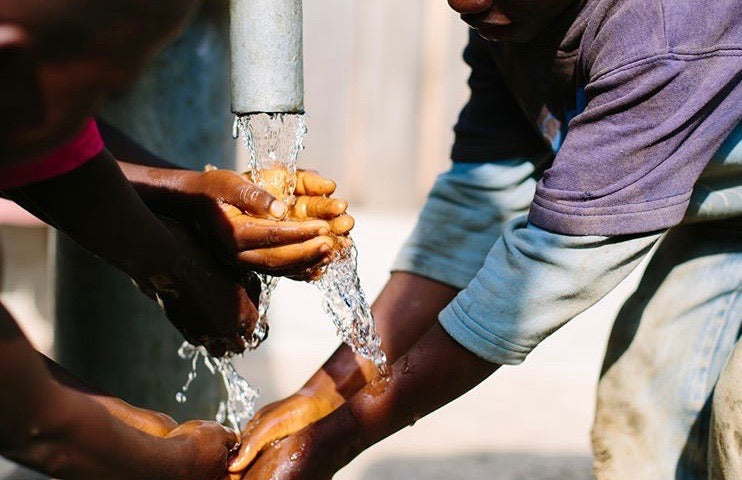
Public case studies from the Katadyn Group indicate that in June 2024, an NGO deployed four SPECTRA Aquifer 4000 units to the Gaza Strip to support immediate, portable drinking water needs, serving nearly 400 families.
For the Aquifer 3000, this case highlights the mission positioning of the Aquifer series: it is not a fixed water plant, but a highly mobile water supply system that is portable, rapidly deployable, and capable of treating fresh, brackish, and seawater. When public water supplies, electricity, and road conditions are under stress, on-site water production capability directly impacts sanitary conditions, medical support, shelter management, and community resilience in disaster zones.
The Aquifer 3000 is the protagonist here. The Aquifer 4000 case is provided as a context for the series' role in disaster rescue and humanitarian support.
Who is it for, and which missions?
Water Resources Agency and Local Water Bureaus
The Aquifer 3000 is suitable for inclusion in emergency backup planning, high turbidity handling, pipeline failure response, drought rationing, remote island supply, temporary supply distribution, and local disaster prevention inventory.
Military, Coast Guard, and Forward Deployment Units
Field camps, temporary outposts, coastal bases, island missions, forward command posts, and disaster support missions require mobile equipment capable of independently establishing drinking water sources. The Aquifer 3000 reduces reliance on bottled water and truck transport, strengthening mission sustainability.
Firefighting and Government Disaster Response Units
In incidents involving earthquakes, typhoons, heavy rain, water outages, or road closures, temporary medical stations, shelter centers, supply assembly points, and forward operating bases require rapid establishment of drinking water supplies. The Aquifer 3000 can support large-scale temporary outposts and high-demand tasks.
Private Disaster Prevention, NGOs, and Corporate Resilience
Private rescue, humanitarian aid, remote area supply, corporate business continuity management, and critical infrastructure backup can all integrate the Aquifer 3000 into project-based supply solutions. It addresses water supply capability under disaster and mission conditions, rather than general daily water needs.

Confirm these points before deployment
Mission Water Source: Identify the primary source: fresh water, brackish water, seawater, groundwater, reservoir, river, or temporary post-disaster source. Different conditions affect pre-treatment, consumable management, and production strategy.
Power and Fuel: Confirm the availability of 208-240 VAC power on-site, a 3.5 kW class generator, fuel supply, and power management workflow. The Aquifer 3000 is high-capacity equipment; power configuration directly affects mission stability.
Handling and Deployment Logistics: The system consists of two rugged cases. Pre-verify vehicle transport, unloading personnel, ground conditions, intake distance, drainage location, and operational space.
Personnel Training: This is mission-critical equipment, not a consumer filter. Agencies must establish workflows for intake, water production, quality monitoring, filter replacement, cleaning, maintenance, troubleshooting, and storage.
Consumables and Maintenance: Include pre-treatment filters, reverse osmosis membranes, hoses, connectors, salinity monitoring, and scheduled maintenance in your inventory management. True water resilience comes from the system itself and a complete maintenance regimen.
Sources and References
- Mabu Valley Product Page: SPECTRA Aquifer 3000 Mobile Water Generation System
- SPECTRA Aquifer 3000 Factory Fact Sheet
- SPECTRA Aquifer 3000 Factory Operation Manual
- Katadyn Group Case: Aquifer 4000s deployed to the Gaza Strip
This article is based on verifiable product data and public case studies, focusing on the Aquifer 3000's positioning, factory specifications, and its applications in water disaster relief, military readiness, government response, and mission-based water supply.
Conclusion: Empowering the Mission to Generate its Own Drinking Water
The focus of the SPECTRA Aquifer 3000 is not just filtering water; it is enabling units to establish a source of drinking water on-site when roads, electricity, public infrastructure, or transport conditions are restricted.
Its high-capacity production, multi-source handling, mobile deployment, and flexible operating modes make it specifically suited for water disaster relief, military readiness, island outposts, firefighting, government response, and humanitarian support. When water supply is no longer solely dependent on transport from the rear, the mission site gains a layer of truly actionable resilience.
For units facing extreme weather, the initial phases of disasters, island support, and forward deployment, the Aquifer 3000 is a professional system that transforms on-site water sources into mission-ready supply capabilities.
[[Related Products]]
Professional equipment of this type is typically managed through project assessment, custom ordering, institutional procurement, and professional training. If you require technical specifications, mission configuration, procurement processes, or deployment plans, please contact the Mabu Valley Official LINE.