Qianghu Column | First Overseas Hike: Even Beginners Can Explore a World Heritage Site!

Why is the Kumano Kodo the perfect first step?
When many people first consider overseas trekking, they often have some uncertainties:
Can I finish it? What if I have no mountain climbing experience? Will Japan's transportation and luggage arrangements be complicated?
If you have these questions, the Kumano Kodo might actually be the perfect place to start.
The Kumano Kodo is not a path for racing.
It connects forests, shrines, and villages, and was once a pilgrimage route for worshippers heading to the three grand shrines of Kumano. For over a thousand years, natural landscapes, history, culture, and religious beliefs have converged on this path, making the Kumano Kodo a UNESCO World Heritage pilgrimage route.
Today, the trails are well-maintained, and there are various ways to walk them. Even without extensive mountain climbing experience, you can explore them at a pace that suits you.
The itinerary arranged by Chiang Hu focuses on light trekking. You only need to carry a small backpack for the day and walk for several hours each day, following in the footsteps of ancient pilgrims, passing through forests, entering villages, and pausing before shrines, discovering Japan's thousand-year-old pilgrimage culture step by step.
If you are planning your first overseas trekking trip and also love history, culture, and architecture, the Kumano Kodo would be a perfect place to start.

Walking the UNESCO World Heritage pilgrimage route is no longer just a dream.
For us, a good trekking trip is not just about completing a certain number of kilometers, but about making the experiences along the way truly last, becoming precious memories in life.
This journey will fully visit the three grand shrines of Kumano and also explore sections of the ancient path that are less visited by typical tourists. After leaving the bustling tourist attractions, you will naturally slow down in the forest, focusing more on your breathing, your pace, and your feelings in the moment.
We use a small-group format, hoping that each participant can maintain their own pace without feeling pressured to catch up with anyone. Within the limits of safety and the itinerary, you can slowly experience the ancient path and build connections with the local area.
Why do we arrange it this way?
In-depth cultural pilgrimage to the three grand shrines of Kumano
The value of the Kumano Kodo lies not only in the trails themselves. Through introductions to the three grand shrines of Kumano, the roadside Oji shrines, and the pilgrimage culture, we hope that everyone will not just pass by the attractions, but gradually understand why people have come here for over a thousand years, and why they are willing to walk step by step toward Kumano.

Local living experience
Trekking by day, staying in a mountain village guesthouse by night, and soaking in hot springs. The journey is not just about walking through a place, but also gradually entering the rhythm of life in Kumano.
In some guesthouses where we rent the entire building, we will go to a nearby supermarket together to buy ingredients, share the cooking, and have dinner together. Without the rush of the city, everyone can share the scenery and feelings they saw during the day, making the local living space a part of the journey.
Some accommodations retain Japanese living features such as tatami mats and Japanese-style living rooms. Staying there is not just another night's accommodation, but a brief step into another way of life.
For us, travel is not just about reaching a destination, but also about stepping into the life of a place.

Luggage transfer makes your first overseas trekking trip more relaxed.
From Tanabe City all the way to Shingu City, the route involves multiple transportation transfers and luggage moves. For first-time visitors or those planning it themselves, these arrangements can sometimes be more troublesome than the trekking itself.
Therefore, we arrange local luggage forwarding and necessary bus transfers, saving you the burden of carrying large luggage every day and researching complicated transfers. Participants only need to carry a small backpack for the day's trekking, leaving their energy and attention for the forest, the ancient path, and the scenery before them.

Professional mountain guides accompany you
The anxiety of your first overseas trekking trip often comes not only from physical fitness, but also from uncertainty about unfamiliar environments and the pace of the itinerary.
Chiang Hu arranges professional Taiwanese mountain guides to accompany the group, helping participants maintain a trekking pace, monitor their physical condition, and provide necessary safety care and flexible adjustments during the journey.
"Being able to adjust to the environment at any time, quietly yet powerfully providing the team with a steady sense of safety." This is the genuine feedback from many participants over the past few years about Chiang Hu's guides.

The nights on the Kumano Kodo are also an important part of the journey.
After a day of trekking, everyone eats together, organizes their equipment, and shares small stories that happened along the way.
Those seemingly ordinary moments are often the most memorable parts after the trip ends. Because what truly creates a connection in a journey is not just which shrine you visited or how many kilometers you walked, but also the process of living together with companions and taking care of each other.

The Dual Pilgrimage Route — Completing an Important Milestone of the Kumano Kodo Japan Section
Among the many routes of the Kumano Kodo, the Nakaohe route is one of the most representative. This itinerary will proceed along the Nakaohe route, collect stamps from designated sections, and complete the Kumano Kodo Japan section milestone required for the Dual Pilgrim certification.
"Dual Pilgrim" refers to pilgrims who have completed the designated routes of both the Kumano Kodo in Japan and the Camino de Santiago in Spain and obtained the relevant certifications. After completing the required routes and registration in both places, you can obtain the status of a Dual Pilgrim.
The symbol of the Dual Pilgrim is composed of the scallop shell symbolizing the Camino de Santiago and the Yatagarasu, symbolizing the Kumano faith.
The scallop shell symbolizes the journey, baptism, and rebirth; the Yatagarasu is the divine bird that brings guidance in Japanese mythology. One symbolizes rebirth, the other symbolizes guidance, and they also make the two distant world pilgrimage routes sister routes that echo each other.

Leave your first time to a path you can slowly walk into.
Your first overseas trekking trip does not have to start with a challenge to your limits.
It can also be a journey where you walk at a leisurely pace, with someone to accompany you, and can simultaneously get closer to nature, culture, and local life.
We hope that the Kumano Kodo is not just an overseas trip you completed, but your first step in starting to believe in yourself and starting to love walking into nature.
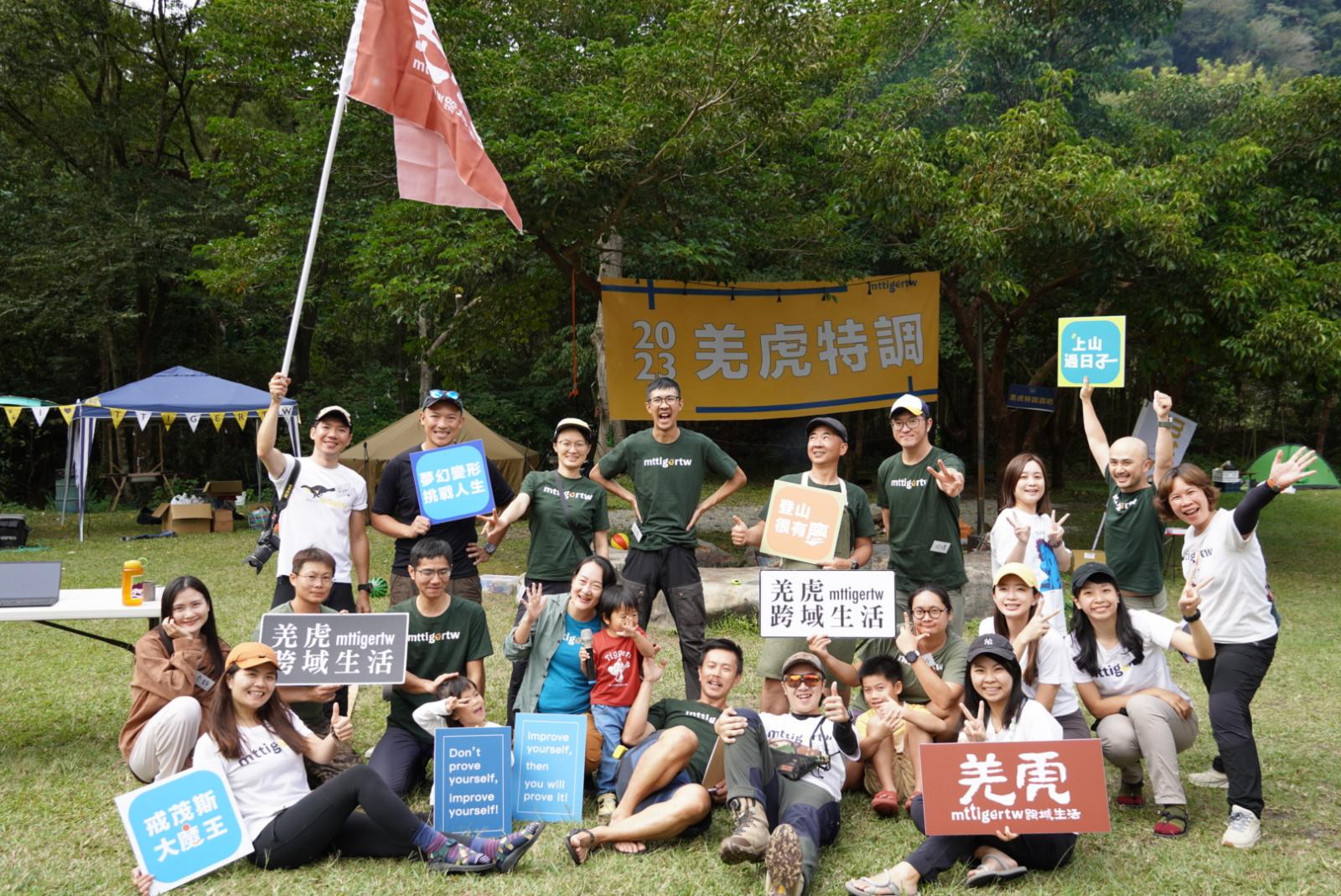
 "Chiang Hu Cross-Domain Living: Combining the philosophy of mountain education, helping friends build outdoor safety awareness and skills through rich practical courses and professional guidance, allowing everyone to confidently face the challenges of the mountains and forests. At the same time, advocating the responsibility of conserving the natural environment, passing on the love and respect for the mountains and fields to more people, realizing a complete journey of cross-domain learning and experience."
Go to Chiang Hu Cross-Domain Living
Mabu's Reflections After Reading
Reading this reminded me of my first overseas mountain climbing trip, which was to Mt. Hotaka in Japan. It was rare to spend a vacation climbing mountains on a trip abroad, which might seem unbelievable to many people. But for me, who loves the outdoors, this was also a new cultural experience.
The Kumano Kodo in the article does not only have forests and trails, but also shrines, villages, and local life. Going abroad to climb mountains is not just about changing places to see scenery, but also about slowly getting to know that place by walking.