Rotary Thailand Village Water Supply Case Study | KATADYN Drip Gravity Filter System Improves Drinking Water Hygiene
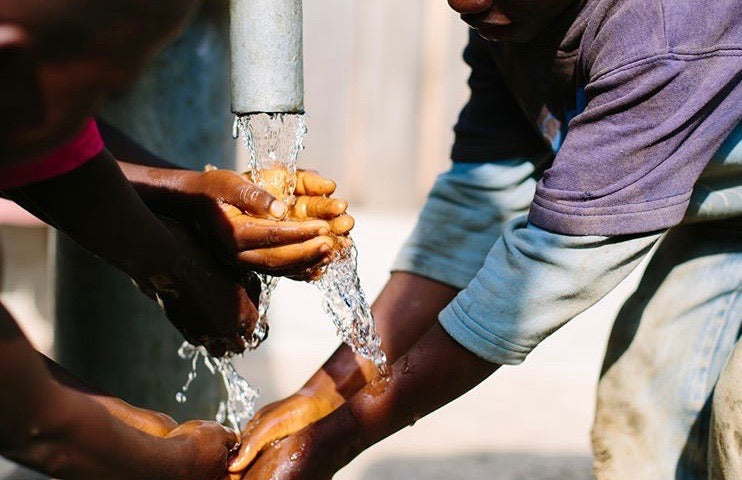
Families in Ban Bo Ong and Wang Hin, Thailand, though located in different regions, faced the same problem: contaminated water sources, leading to repeated bouts of diarrhea in children and residents.
Rotary District 2000, Switzerland, selected 60 families in each village most in need of assistance and deployed KATADYN Drip Filter Ceradyn units, using electricity-free ceramic gravity filters to improve daily drinking water.

案例原始資料|Original Case Information
兩個村落,相同的飲水問題|The Challenge
Ban Bo Ong is located near the Khao Laem reservoir, close to the Myanmar border. The village has about 400 households, with no roads, electricity, or communication facilities. Residents primarily rely on lake and rainwater; the original case study indicates that local water sources are severely polluted.
Wang Hin is located in a region near the Laos border, with approximately 300 households. Children in the village frequently suffer from diarrhea, and families needed a drinking water treatment method that did not rely on electricity and could be operated daily at home.

重力完成的家戶濾水|The Solution
The Drip Filter Ceradyn consists of two 10-liter containers (upper and lower) and three ceramic filter elements. After adding raw water to the upper container, the water passes through the ceramic filter elements by gravity and then flows into the clean storage container below, requiring no electricity, pumps, or complex piping.
Families can obtain their daily filtered drinking water by filling the upper container 2 to 3 times a day. When the flow rate decreases due to sediment buildup on the ceramic surface, it can be brushed clean according to the operating instructions to restore filtering efficiency.

健康改善與後續擴大|Project Outcome
The case study documents that approximately two months after the system's implementation, incidences of diarrhea in both villages virtually disappeared. Rotary subsequently planned to expand this approach to more regions, with the original case mentioning a subsequent goal of reaching up to 60 villages.
This achievement stemmed from continuous daily use by families, rather than a one-time large-scale project. The equipment operates without electricity or fixed piping, allowing filtration to occur where drinking water is truly needed.
Learn more about the KATADYN Drip Gravity Filter System

馬布谷觀察
When public water and electricity are unstable, household gravity filtration can integrate water treatment directly into daily routines.
The results from the two villages also show that equipment must meet several conditions simultaneously: ease of operation, ease of cleaning, sufficient flow rate, and the ability to be sustained locally.
For remote outposts, disaster shelters, group camps, and community resilience, key planning considerations for gravity filtration systems include raw water turbidity, daily consumption, container cleaning, filter element maintenance, and user education. The equipment itself is merely a starting point; correct operation ensures a continuous water supply.