Qianghu Column | Cypress Temple – A Level-Skipping Approach to Hiking Risk Assessment

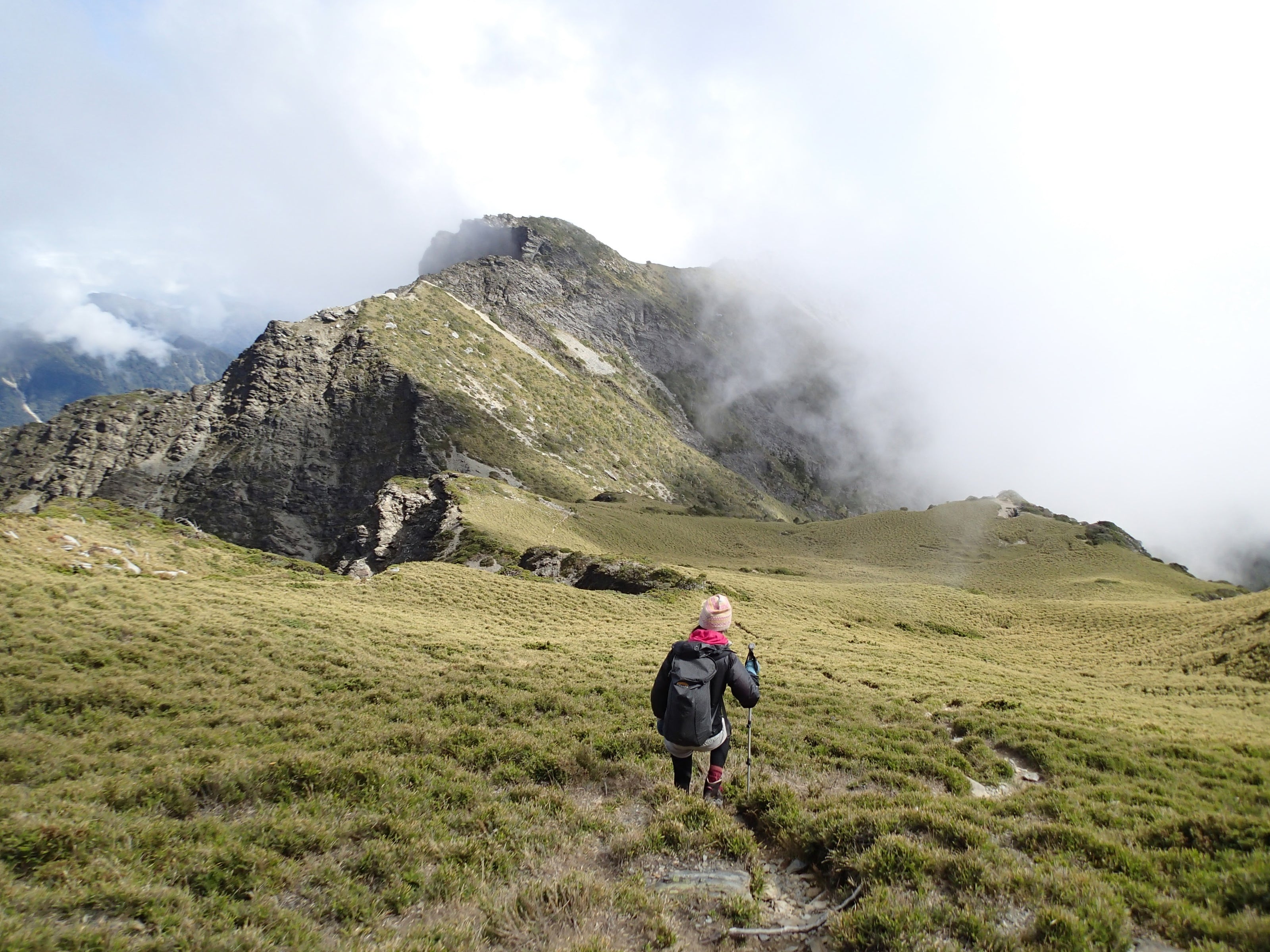
The Temple Pond trail leading to the Karay ridge is truly a f***ing ridge, man!!!!!!!!!!!
From September 17 to 21, 2021, we went on the advanced Mt. Fubai Temple course. The weather was great, and everyone went together to find plenty of sacred trees under the Mid-Autumn moonlight. Stories usually start with pleasant expectations.

On the last day, September 21, 2021, we descended from the Tao Shan trail (an emergency evacuation route, not the planned route, although it saved us the entrance fee). While eating goose meat with the team at Yuanshan, we chatted about the past few days' itinerary. On the drive home, I reflected:
“Did I bring too many people to fight monsters above their level?”
Honestly, as long as everyone stays together on this route, the most dangerous risk of getting lost will be greatly reduced by modern technology on the Ludi map (assuming you know how to use it). But has it been underestimated?
“Come on, let’s go see for ourselves!!”
After reading several accounts, the common terrifying keyword was : very dense arrow bamboo.
Plus another shocking discovery on site: The trail markers would disappear at critical moments.
So, what I thought would be a pleasant hike whistling past giant trees instantly escalated into a tragic, epic, and utterly miserable trek.
We didn’t even have the courage to retreat. We were completely terrified of the campsite guards from the previous two days—the little black mosquitoes (and there were actually steep ascents and descents too). We had to grit our teeth and spend hours navigating through vegetation that didn’t follow the trail (steep slopes + dense arrow bamboo + two-meter-diameter fallen trees + cogongrass + thorny roses), making us question our very existence.
The only conversations left between team members were: “Is everyone still behind me?”
And: “Where are you, [Name]?”
And: “Crap! Did I fall into a hole?!!”
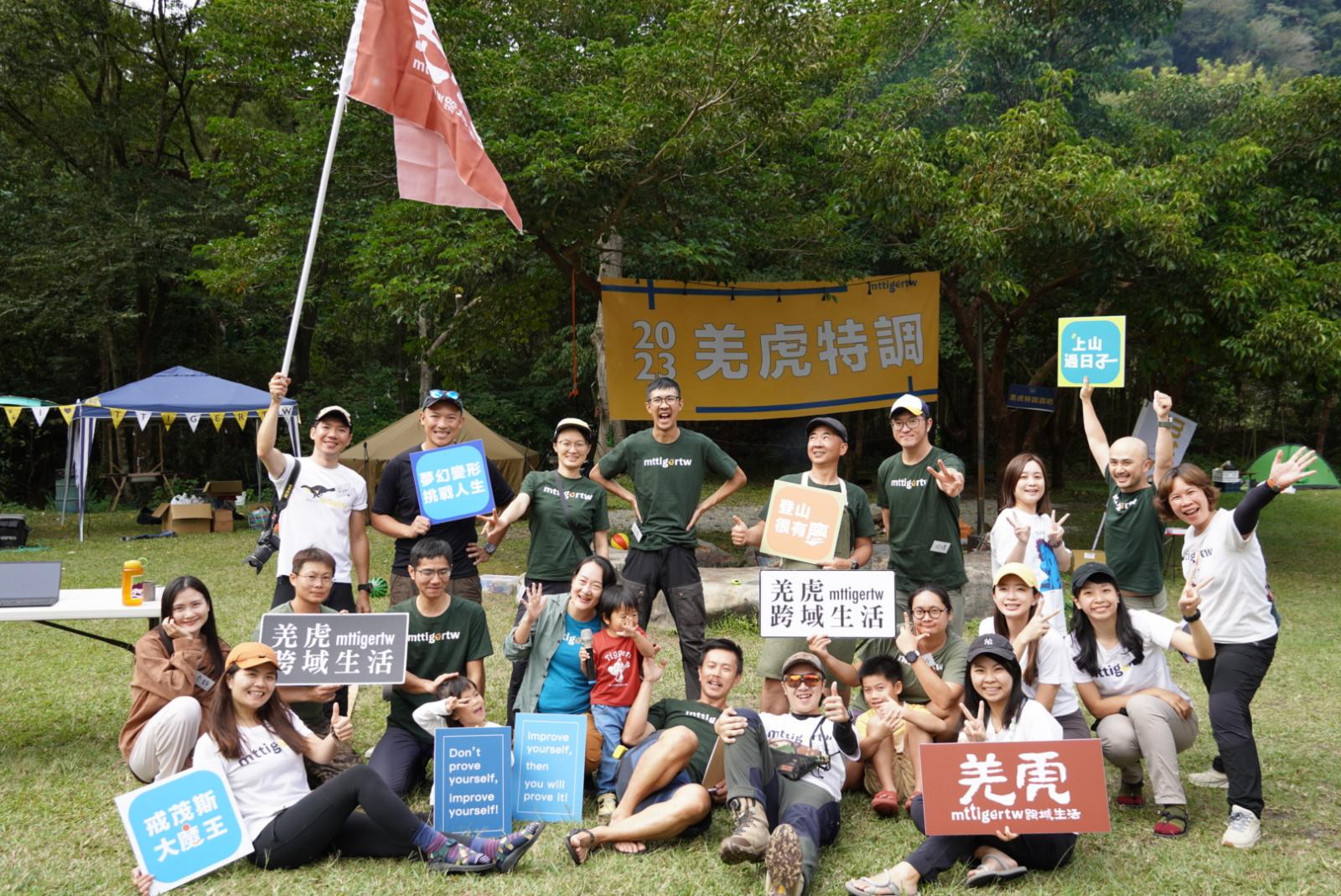
But we still had to remember to keep smiling for the camera.


After a good night’s sleep and some reflection back home, the question of whether to bring newcomers to fight monsters above their level becomes a matter of assessing “level.” Moreover, both the individual level of the team member and the level of the monster must be evaluated. Who exactly is overleveled?
I even recalled my conversation with Eric: “After completing the course, everyone will be able to tackle the Hundred Peaks on their own.”
???!!! This hole is huge. Who knows which ridge you’ll take to the Hundred Peaks? That makes a big difference~
This time, Paul and Ryan in the team had both been on the Four Peaks itinerary before, but they had deliberately avoided Karay. They never expected that not long after, they would have to carry heavy gear from Temple Pond to Karay. I guess I shouldn’t speak too soon or too confidently, lest I end up sounding like a complete fraud!

Speaking of fighting monsters above your level, you still need to consider that you might occasionally encounter a major boss (one that exceeds the team’s level). What is the strategy when you do? When you’re not strong enough, you usually try to avoid major monsters (i.e., not schedule them), so encountering one is always unexpected. The toughest situation is when the team’s level is neck-and-neck with the boss’s. When you run into one, it’s a real battle. Since you’ve already encountered it, there’s no more running away. Whether you win or lose, you’ll gain experience (everyone levels up). My attitude is: if you run into one, fight it. If you can’t win, retreat. And when you retreat, do so in an orderly fashion.
By the way, an afternoon convective storm fried my phone again! That’s three down.
Even though we had paper maps, I was too lazy to waterproof them, and sure enough, I learned my lesson about nothing. The cycle continues. Although our advantage was that a nine-person team had nine phones—even if one was fried, we still had eight. And a little secret: when there’s no signal, only the first two people usually keep tracking their location on the Ludi map. But I’ve also thought about it: in a solo trip, you only have one phone. In this day and age, if your phone is fried, your route is also lost (because no one has a paper map or compass). You have to be careful. It seems I need to carry several extra phones on me just in case. If anyone has an old phone they don’t use, please donate it to me. Thank you.
As for the trail markers disappearing at critical moments, it made me think about “not leaving trail markers.” We’ll explore that in another post.

How do you assess your level when fighting monsters above your level? There are a few more things I want to share, so I’ll quickly write them down while I still have some inspiration.
To reduce the risks of hiking in Taiwan, I believe there are two main areas we can focus on: first, improving your own skill level; second, reducing the difficulty of the itinerary.
There’s a lot to write about improving your skill level. It can be very simple or very complex, but it can be summarized as a three-tiered pyramid: the base is skill training, the middle is physical training, and the top is mental training.
So how do you assess your level? There are two ways: first, pay someone who knows what they’re doing to assess you; second, learn the hard way.
To reduce the difficulty of an itinerary, there are three key factors: time, money, and people.
Simply put, the more time, money, and capable people you invest in an itinerary, the lower the risk. A three-day itinerary can be spread over five days, so you don’t have to start before dawn or return after dark, allowing for more rest and recovery. With more money, you can upgrade your equipment, hire support to transport supplies in advance, and bring medical advisors to keep you going. With strong people—yourself, your teammates, and your support crew—you’ll be better prepared.

What’s interesting about hiking is that people with very high skill levels rarely choose to reduce the difficulty of their trips. The main reasons are that they don’t get a sense of accomplishment, it’s too boring, uninteresting, or they can’t improve themselves. It’s just like how a level 87 protagonist would never keep fighting level 2 slimes—even if they fought ten thousand of them, they wouldn’t level up.
Another interesting thing is that when your level is low, you love fighting high-level monsters. It’s no wonder high-level monsters are so appealing. I mean, if you saw a level 989 fire-breathing dragon, wouldn’t you be tempted? So what can you do about it?
The fastest way is to start with the three key factors for reducing the difficulty of an itinerary. If you have time, take your time with it; otherwise, spend a lot of money or find strong teammates. Then you can fight monsters above your level! Fighting high-level monsters has a minimum level requirement, so at least complete the skills at the base of the pyramid first!
You can load an old save file in a game to start over, but you can’t do that with your life.

 “羌虎跨域生活: Combining the philosophy of mountaineering education, we help our mountain friends gradually develop outdoor safety awareness and skills through a wide range of practical courses and professional guidance, enabling everyone to confidently face the challenges of the mountains and forests. At the same time, we advocate for the responsibility of protecting the natural environment, sharing our love and respect for the wilderness with more people, and creating a complete journey of cross-disciplinary learning and experience.”
Go to 羌虎跨域生活
Mabu Valley Post-Reading Reflections
My first mountain climbing trip was to Mt. Xiluan. For many people, that might be an ordinary trip, but for me at the time, it really was a case of fighting above my level. Fortunately, I had reliable companions with me that time. Reading this account of “fighting monsters above your level” reminded me of that experience.
I think fighting above your level isn’t the problem itself. The key is to have the right mindset and to prepare properly. Having reliable companions is important, but you still can’t skimp on the preparations you need to make yourself.
For me, every time I fight above my level, it’s a form of evolution.