Qianghu Column | Should Hiking Trails Be Free of Trail Markers?
Mountain Tiger Column | Not leaving trail markers?
Author: Huang Yao-He

There are many examples showing that GPS tracks cannot completely replace the role of trail markers (ribbons). Based on my current experience, I would like to propose a few points worth reflecting on.

1. Even with good signal reception, track recordings will have slight discrepancies due to different receivers (mobile phones). Therefore, the initial GPS track you download (recorded by someone else) can only be used for reference; it is difficult for it to match perfectly.
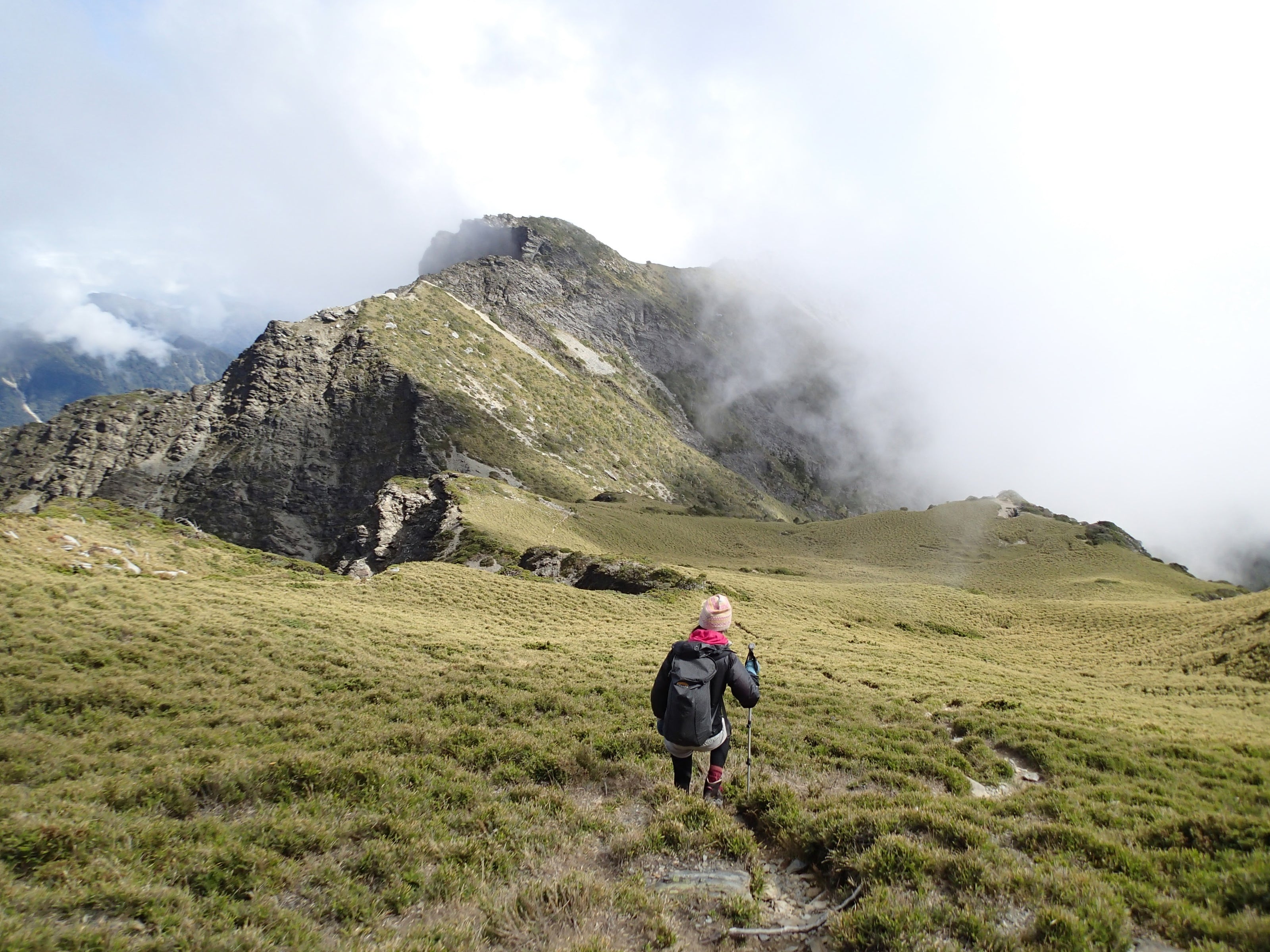
2. Following the above, when walking on a clearly defined trail, if you insist on following someone else's track, you will find that many times you might have to step off the trail. You won't, though; you will still follow the path because you know that walking on the trail is efficient and consumes less energy and time.
3. Following point 2, when encountering forks—whether it is a trail-to-trail fork, a trail-to-game-trail fork, a trail-to-exploration-route fork, a trail-to-pipeline-maintenance-path fork, a trail-to-toilet-path fork, a ridge junction, etc.—referencing others' tracks is very useful. Even if you know they might be offset, the general direction will not be too far off.
4. Following point 3, trail markers or path signs can replace the role of GPS tracks in these moments. In fact, modern digital tracks are gradually replacing marker ribbons. Leaving signs is an ancient practice; even more primitive methods include stacking stones, carving wood, or snapping off leaves and branches (used temporarily).
5. The above discussion assumes a clear trail (or that you understand the difference between human-trodden paths and original mountain terrain). If you need to enter the wilderness or exit from it, and no one has left a GPS track, even if you have maps, a compass, or digital/paper resources and use them to confirm your target direction, you will still need to spend more time searching for gaps in the vegetation and finding terrain that your abilities (and equipment) can traverse. Spending more time is the key.

6. If this route (a non-established path) was traveled by someone long ago who left signs (markers, blazes, tracks), there is definitely positive reference value (need I say?), but there are also definitely negative impacts.
7. Let me elaborate on the positive reference value: in my mind, markers are mainly used to guide you to the most accessible route (direction). It’s like saying, "Follow me!!!" You can save yourself a lot of detours. You can find the least dense path through dense arrow bamboo, know whether to bypass to the left or right or climb over a large fallen log, receive guidance on a traverse descent point before a broken-backed ridge, or choose between a left or right path on two parallel ridges.
8. The negative impact is worth discussing. We have finally reached the topic of "not leaving markers." I won't discuss the environmental waste issue here (it is an issue, but let's not get off topic). Markers can guide directions and help those behind find a good path with large openings and no difficult terrain. However, human nature will inevitably evolve a "strange species" (those who only follow markers), which is not great unless the route is constantly updated with new markers and kept clear—but is that possible?

9. Following point 8, assuming at least one team updates the route markers every year and even points out more efficient passage points, blind reliance on markers won't cause too much of a problem. Furthermore, this route might eventually become a clear trail. If it undergoes the strenuous work of a "machete team," secret spots will no longer be secret! This is my personal take on the first negative impact.
10. Following point 8, suppose no one updates the markers for several years. Vegetation will change, trees will grow or fall, bamboo will die off and regrow, pampas grass and thorny plants will spread, rocks will crumble, and slopes will shift. Paths that were once considered easy may become difficult (e.g., new fallen logs), and paths thought to be difficult may become easy (e.g., pampas grass disappearing). Would you still follow it?
11. Following point 8, is it possible that the initial team that tied the markers was simply extremely strong (in terms of passing ability)? They could get through, but can you?

12. Following point 11, could there be another possibility: the initial team was incompetent (in map reading) and just kept wandering around, and you can't even tell if they were doing it on purpose just to accumulate daily steps? Do you still want to follow them?
In conclusion, I am truly grateful for the markers left by those before me, but to avoid the abilities of later generations from declining too quickly, I have decided not to tie markers myself, unless there is a more significant work requirement (like rescue or research).
 "Mountain Tiger Cross-Domain Life: Combining mountain education concepts, we help hikers gradually build outdoor safety awareness and skills through rich practical courses and professional guidance, allowing everyone to confidently face the challenges of the mountains. At the same time, we advocate for the responsibility of conserving the natural environment, passing on the love and respect for the wilderness to more people, and achieving a complete journey of cross-domain learning and experience."